

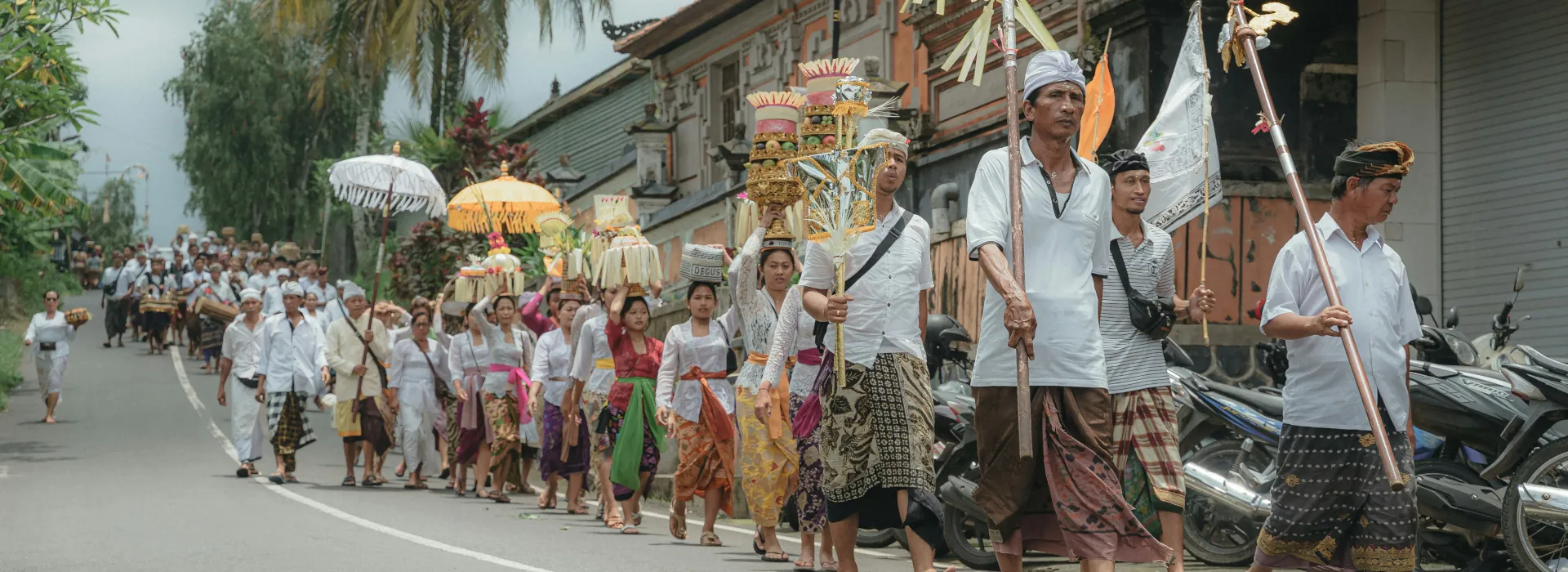
Nyepi, Galungan & Idul Fitri
Public Holidays in Bali
Bali is an Island that is known for its rich cultural heritage with many traditions and celebrations, stunning landscapes and of course also for the incredible surf.
Although the population of Indonesia is predominantly Muslim (87%), the predominant religion in Bali is Hinduism. Approximately 90% of the Balinese are Hindus, making Bali, after India, the place with the most Hindus. Christians, Muslims and Buddhists are minorities. Due to this variety of religions that people in Bali believe in, there are different holidays from different religions every year. Holidays or days off in the working calendar in Indonesia are called “Hari Merah” which translates to red days. Throughout every year in Bali, there are many different public holidays, most of which are religious. Often the religious holidays vary each year and don’t always fall under the same dates.
Many of these holidays are provided to every one of each religion fairly and equally with a sense of recognition. Oftentimes, even if you do not follow a religion that has a holiday on a specific day, you will be given time off. And every year, these holidays will come up.
If you are travelling to Bali it will most likely happen that you will stay during one of the holidays. Let us show you the most important, biggest and most interesting public holidays in Bali:
Nyepi: The Day of Silence
Nyepi or “The Day of Silence” is a celebration sacred to Bali, it can’t be found anywhere else. It marks the traditional celebration of the Balinese New Year and is one of the biggest and most important holidays in Hinduism. The Balinese New Year consists of a series of festivities and traditions like Melasti, Ngrupuk, Ogoh-Ogoh and Nyepi. The most exciting thing about this holiday is probably the 24-hour shutdown. The whole island closes down for this day and the Hindu Balinese stay at home during this time. They do not speak to each other, answer phones or take in guests. There won’t be any lights, cars, motorbikes, or people on the roads or at the beaches.
You can read here what exactly it's all about and what you, as a tourist, have to bear in mind during this holiday:
Nyepi in Bali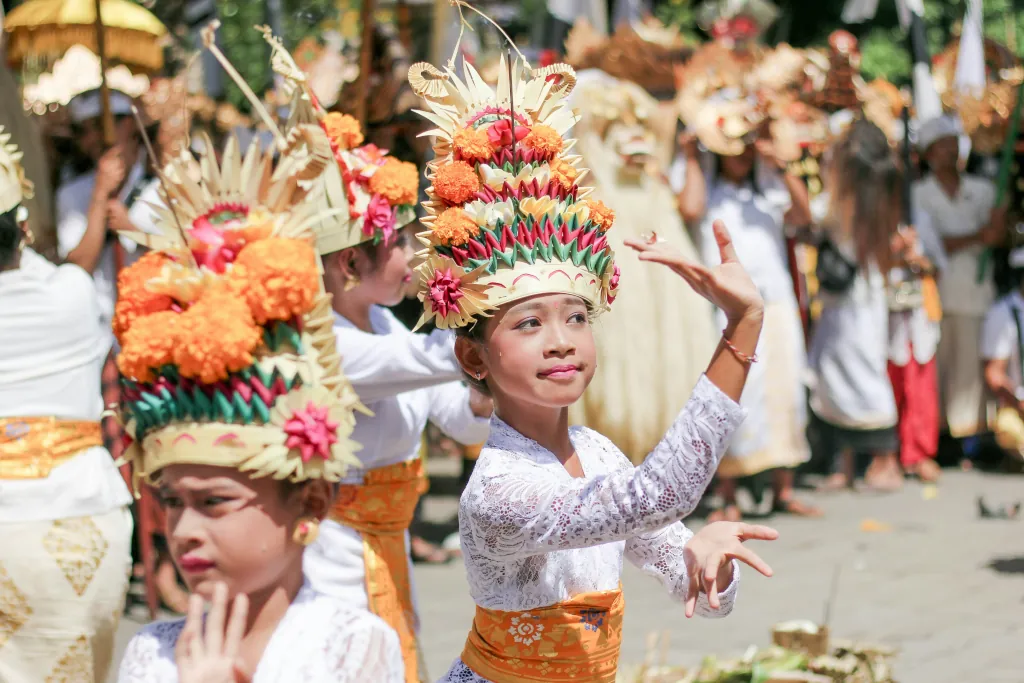
Idul Fitri
After the Islamic holy month and weeks of fasting, Muslims celebrate Idul Fitri, the nation's biggest holiday. Ramadan is the holy month for Muslims and is celebrated every year on the 9th month of the Islamic calendar. It represents and celebrates the first declaration of the Quran to Prophet Mohammed. During this month, Muslims follow a strict fast from dawn until sunset, not allowing them to drink or eat, with times varying each year and depending on location. After this month is over, Idul Fitri or Eid al-Fitri is celebrated. It takes place after the 9th month is over. On this day, family and friends gather for delicious meals and great gifts to exchange. In Bali, you can often find restaurants which celebrate Idul Fitri. Often, traffic is more hectic and often transportation such as Gojek will be hard to access. Idul Fitri celebrates the achievements of the Muslim people and is greatly recognized in Bali.
Galungan & Kuningan
Galungan is essentially “Balinese Christmas” as it celebrates the victory of good over
evil which the Balinese label as Dharma over Adharma. The exact date of Galungan
varies every year but it always falls on a Wednesday, that is the tradition. It is
believed that on Galungan day ancestral and deceased relatives' spirits visit earth.
The spirits of deceased relatives return to visit their former homes and their living
families are responsible for being hospitable and welcoming their deceased relatives
and ancestors' spirits. They do this through prayers and offerings throughout their
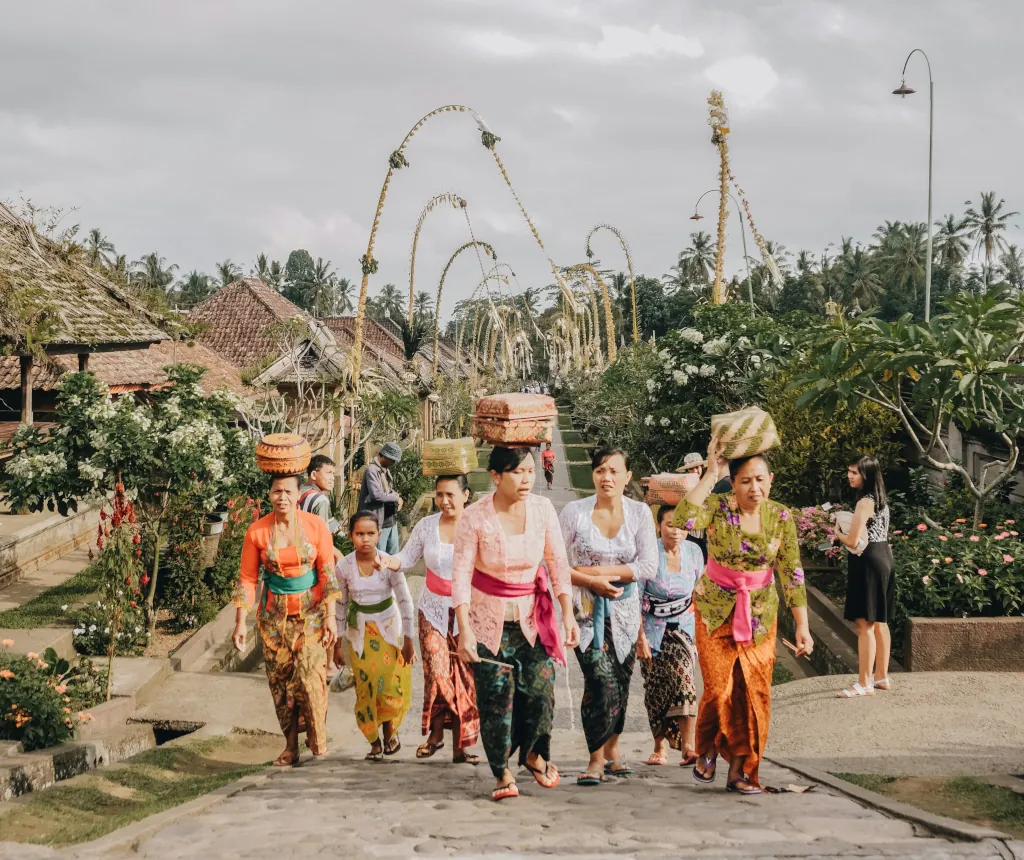
homes and villages. This is done with Penjors. Penjors are bamboo poles decorated with
bamboo leaves and offerings which stand at the side of roads. Galungan brings family
together and is celebrated with lots of delicious traditional Balinese foods. Kuningan
Day marks the end of the Galungan holiday which happens
Indonesian Independence Day
Indonesian Independence Day is celebrated every year on the 17th of August across the nation. This day recognizes the claim of Indonesian independence in the Indonesian War of Independence between the Republic of Indonesia and the Dutch Empire. This is greatly celebrated by locals every year, starting from morning to night. On the morning of the 17th of August, the national Flag Hoisting ceremony which takes place in the Merdeka Palace of Jakarta. Bali is not as excessive as other regions on Independence Day, although it is a public holiday most Balinese will honour their nation by usually decorating their homes in red and white and putting a flag around their house. To wish someone a happy Independence Day you say “Selamat Hari Raya Merdeka”
Read more about the Indonesian Independence DayPancasila Day
Formulated by Indonesia's first president, Sukarno, Pancasila is the Indonesian state philosophy. It was first presented in a speech delivered by Sukarno on June 1st, 1945. The 5 principles of Pancasila are:
The Star: Belief in one supreme God.
The Unbroken Chain Of Humanity: Justice and Civility among Peoples.
The Banyan Tree: The Unity Of Indonesia.
The Head of A Wild Buffalo: Democracy through deliberation and consensus among representatives.
Strays of Cotton and Rice: Social justice for all the people of Indonesia.
These are known as Indonesia's coat of arms. The Day of Pancasila recognizes and celebrates the day it was created. Although Pancasila was first deemed in 1945, it was not a holiday until current President Jokowi Dodo declared it in 2016 which was then made a public holiday. Since 2016, it has been celebrated every year on June 1st. On this day, there are flag ceremonies, singing of the national anthem and moments of silence for fallen heroes.
Isra Miraj
Isra Miraj falls under a different date every year since it follows the Islamic calendar rather than the Gregorian calendar. Isra Miraj is an important journey that Prophet Mohammed embarked on in 620 CE. “Isra” is known as the night journey where Prophet Mohammed was led by an angel named Gabriele. “Miraj” is when Gabriele took Prophet Mohammed and brought him to the seven heavens where he would meet other Prophets also known as “the ascension”. The Isra and Miraj hold great significance for Muslims in Bali and are memorialised every year.
Waisak Day
Also known as Vesak is a day dedicated to the life, enlightenment and death of Buddha. Although only 0.68% of Bali and 1% of Indonesia are Buddhist, Waisak Day is a recognised holiday and is marked as a red day (Hari Merah). This day is known as the day when Buddah attained enlightenment and also the day when Buddah passed away. This day is celebrated with flowers, visits to stunning landmarks and vibrant colours. To symbolise liberation, the Buddhist people release animals such as birds which was a part of one of Buddah’s spiritual quests. Indonesian Buddhists gather in the temples and pray to Buddha and his achievements. This day falls under the full moon every year in May. Since Vesak is a Buddhist holiday it is even bigger celebrated in Sri Lanka.
New Year’s Eve and Day
One holiday that shouldn’t be missed is New Year’s Eve at night from the 31st of December to 1st of January. Around New Year’s Eve, the Island is full of people of all nations and religions who want to celebrate the end of the old and the beginning of the new year. Beach clubs, Restaurants and Hotels prepare big parties with thousands of fireworks everywhere. Bali on New Year’s Eve is unmatched and will provide you with an exciting and memorable night on the Island. Also at Kima in Bali, we are celebrating New Year’s Eve with a special dinner and a New Year’s Eve Party in our Canggu Camp.
Are you ready to celebrate New Year’s Eve with us?!
BOOK NOWYou see, Bali has so much to offer and there are so many reasons to visit Bali. Knowing about the biggest holidays might help you to choose the best time to visit Bali for you. However, Bali is a place to be all year round.
