

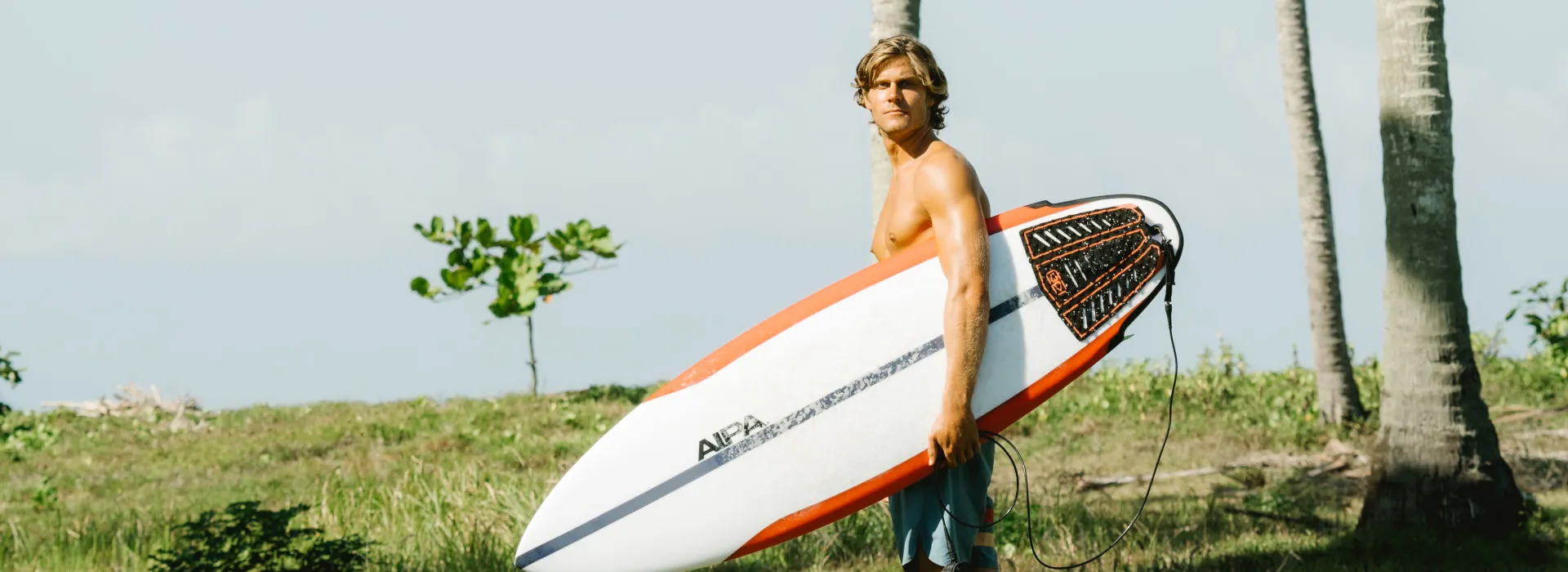
Surfboard Anatomy
A Closer Look at the different parts of a surfboard
Obviously, a surfboard serves as the fundamental tool for any surfer. Yet, beneath the surface, it's far more than a simple plank! Nowadays, the world of surfboard design is more diverse, expensive and free-spirited than ever, so you will see many different features.
Every nuance in a board can impact your wave-riding adventure. Understanding the anatomy of a surfboard and how it affects your wave-riding, can be crucial to get the best out of your surf adventure and also helps you to buy your own surfboard. In this blog, we’ll explain more about the surfboard anatomy and the essentials you need besides the surfboard. A closer look at the basics, from the nose to the tail and from the different fins to the leash!
The Composition of a Surfboard's Dimensions
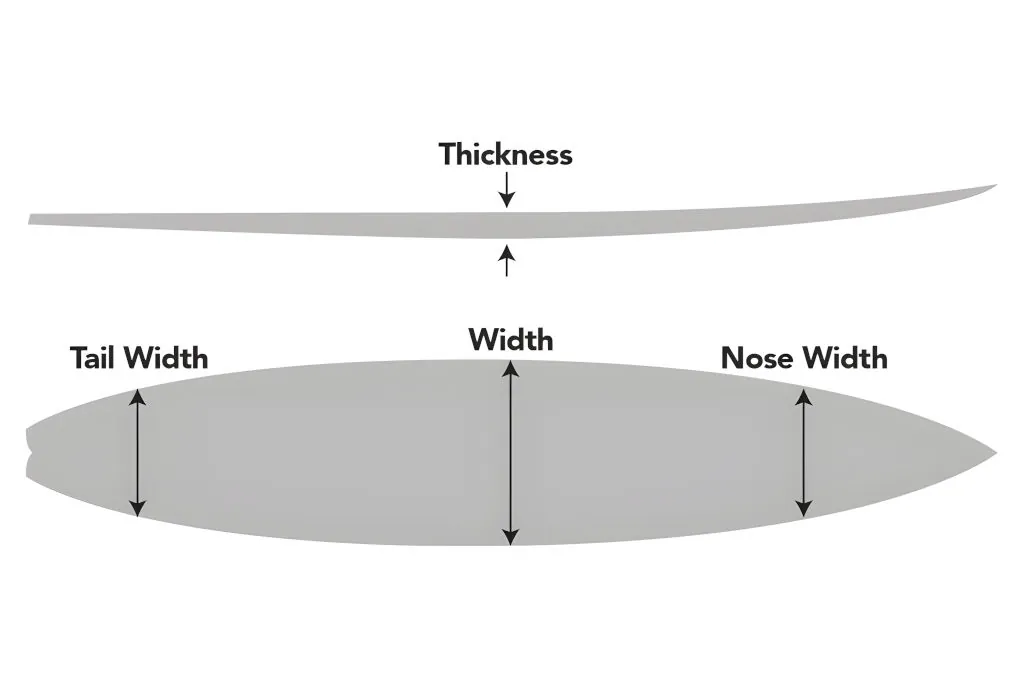
Surfboard dimensions follow a simple formula of measurement: length, width, and thickness. The surfboard’s dimensions are usually found on its stringer near the tail. The stringer is the strip of wood you see running down the middle of your surfboard. It provides strength and a centre for “flex” in your board.
The Thickness - The thickness is a very important feature that everyone needs to be aware of. It will determine in many ways how the other design features of your board will work. The thicker the board the more stable and buoyant it will be. This is especially important for beginners.
The Width - The wider the board, the more stable it will be, resulting in more planning area. Tail width will determine how loose your board is. Shortboards tend to have wider tails while guns have narrower tails for more drive and hold.
The Shape of the Board
The Nose
Starting at the front of the board, with the nose. It affects the way you paddle into the waves. The width and shape determine how your board moves through the water. A pointed nose excellent for cutting through waves. It is good for powerful waves as the board fits in the wave better when taking off. A rounder nose is more forgiving and provides an earlier entry into the wave because of the increased surface area. The rounder nose is ideal for small wave and beginner boards and surfers just getting started.
The Tail
Moving on to the back of the board, the tail comes in various shapes, influencing the board's speed, control, drive agility and performance. Put simply: wider, thicker tails are for smaller waves and thinner, narrower tails are for bigger surf. Here are the 5 most common ones:
1. Squash or Square Tail:
It’s a mix of the square tail and a pin tail, giving you a bit of everything and maximising the surface area. The sharper shape of the square tail creates release for sharper more progressive turns while the rounded corners of the squash tail provide hold. Designed for both controlling the bigger waves and perfect for small to medium waves, offering stability and lift, makes it easier to catch waves. This is the most common tail within shortboards and the most common shape used by professional surfers in beach break conditions where a mix of hold and quick release is needed.
2. Swallow or Fish Tail:
Moving on to the swallow or fish tail, this tail can be found in all types of surfboards and is usually the one for speed and ease of turning. However those pointy corners? They’re all about grip, making a narrower swallow tail another good option for step ups and bigger wave boards. Whether conquering smaller waves or facing the choppy waters, the swallow or fish help you move smoothly through the water.
3. Pin Tail:
Now, the pin tail – the narrowest width tail of any type of tail of a surfboard. Often seen on guns or step up boards, the pin tail is for bigger and more powerful waves since it provides maximum hold when the surfboard is travelling at speed in big steep waves.
4. Round Tail:
This form of tail provides hold without sacrificing release, it’s in between a pin and a squash tail. Usually, feels smoother to surf, good for point breaks where flowing from turn to turn is essential. Due to the width, it has more surface area allowing it to also perform well in smaller-sized waves.
5. Diamond Tail:
The corners of the diamond tail make its turning characteristics a bit more pivotal and sharper than the rounded pin. It’s stable and manoeuvrable and the board feels looser. This tail is suitable for smaller waves where quick turns are crucial.
The Rocker
The rocker is the degree of the curve from the nose to the tail and determines the turning characteristics of your board. Generally speaking, on your standard surfboard, less overall centre rocker means the board will glide and paddle better and is therefore more suitable for beginners. More rocker will accommodate intermediate and experienced surfers looking to use every area of the board to generate speed and turning power.
Flatter Rocker: In the nose, a flatter rocker, or a relaxed one, offers more speed and stability. This design is perfect for catching waves easily and maintaining control in small to medium-sized surf.
Curvier Rocker: A curvier rocker, also called a heavy rocker, in the nose enhances manoeuvrability. This design allows for tighter and faster turns and better performance in larger, steeper and more powerful waves. This rocker is often used by experienced surfers.
The Rails
The sides of your surfboard, the edges, are called the rails. The rails go from the nose of the board all the way to the tail. The performance of your board is affected by the shape of the rails since they are key parts of determining how the board flows in the water.
Soft Rails:
Rounded and smooth, soft rails enhance stability. They are also popular on small wave boards as they do not need a lot of power from the wave to perform well. Turning will not be as aggressive as hard rails but will feel smoother and make paddling easier. Ideal for longboards and beginner boards.
Hard Rails:
Sharper and more squared. Harder rails make the surfboard change direction quicker and are commonly seen on shortboards designed for good waves and more experienced surfers, they can be difficult to surf in weaker conditions as they are more effective in powerful waves where they help the surfer to control speed.
The Deck
The top side of your surfboard is called the deck, the side where you stand while surfing. Decks can be classified into 3 common ones:
1. Dome Deck:
This deck is the most common type of surfboard top. It has less volume at the rails and more volume in the centre, giving it a slight shape of a dome.
2. Flat Deck:
Just like the name reveals, this deck is flat. Usually, this deck has wider rails and less volume throughout the entire board. The rails are thinner. A lot of high-performance shortboards have flat decks.
3. Step Deck:
This deck gives a similar feeling to standing on a skateboard. The deck has a platform with more volume in the centre. and the rails are thinner/lower. When you look at the board from the rails you’ll notice a raised area in the middle of the board, it looks like a step.
The Bottom
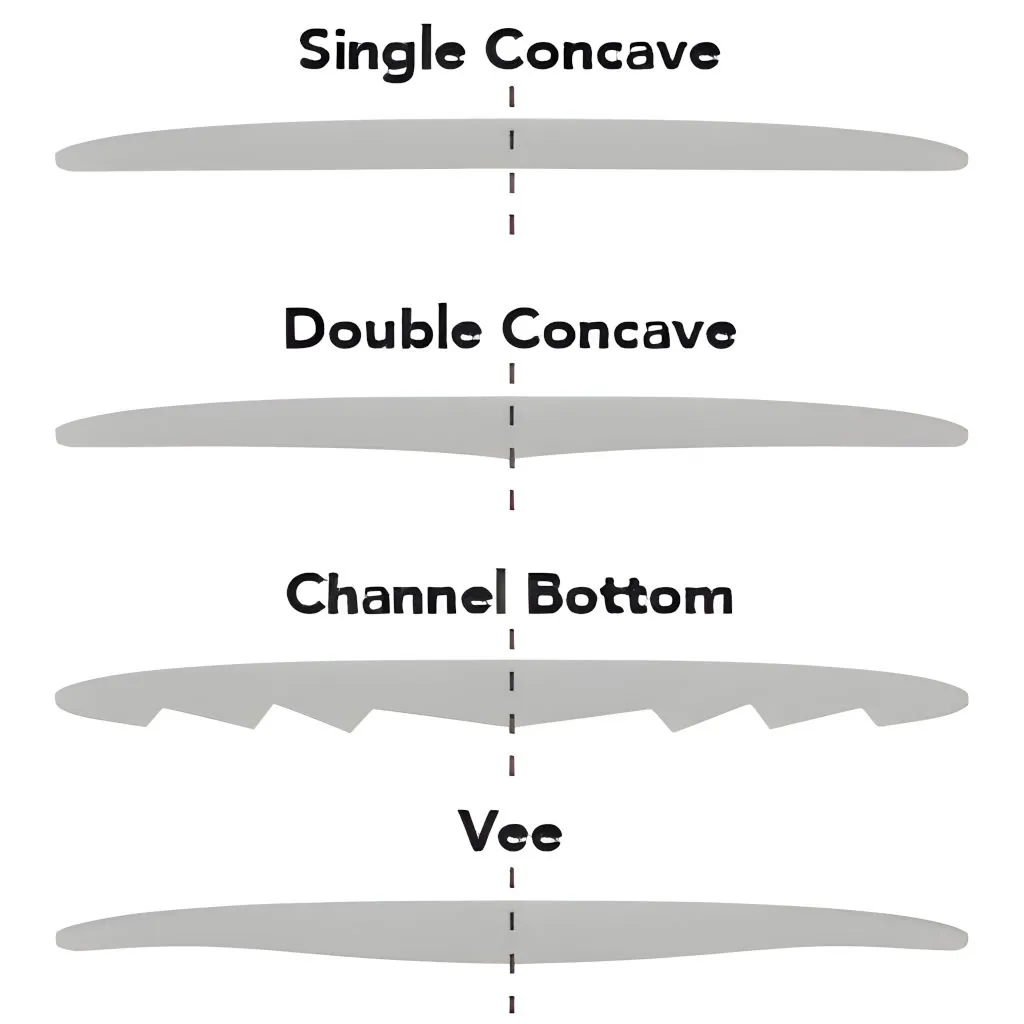
If you flip the board upside down, you’ll see it simply called the bottom. This part of the board plays a major role in how the water flows and how the board performs on the surface. There is more to it than you would think, and there are different types of surfboard bottom contours, including the most common ones:
1. Concave bottom:
This bottom one has two main types – single concaves and double concaves. The bottom of the board is almost dug out to influence how the water flows under the board. Concaves influence the speed and lift of the surfboard. Double concave can give more lift and single concave is good for controlling speed and more powerful waves. A common shortboard bottom comprises a single concave running into a double in between the fins, creating a nice and forgiving yet lively feel to your surfboard.
2. Convex bottom:
If a part of the bottom dips below the rail line, it’s a convex bottom. These are often found on longboards. Why? Because they're great for stability and transition from one rail to the other. There are different types of convex bottoms, like a Vee or a belly, catering to different surf styles and conditions.
3. Flat bottom:
No surprises here – a flat-bottomed surfboard is flat and stays level with the rails. This design brings stability, and buoyancy, and makes catching waves easy. Flat-bottomed soft-top longboards are the go-to for beginners, offering stability and forgiveness as you just start riding the waves.
Surf Essentials: This is what you need!
The Fins: Your Surf GPS
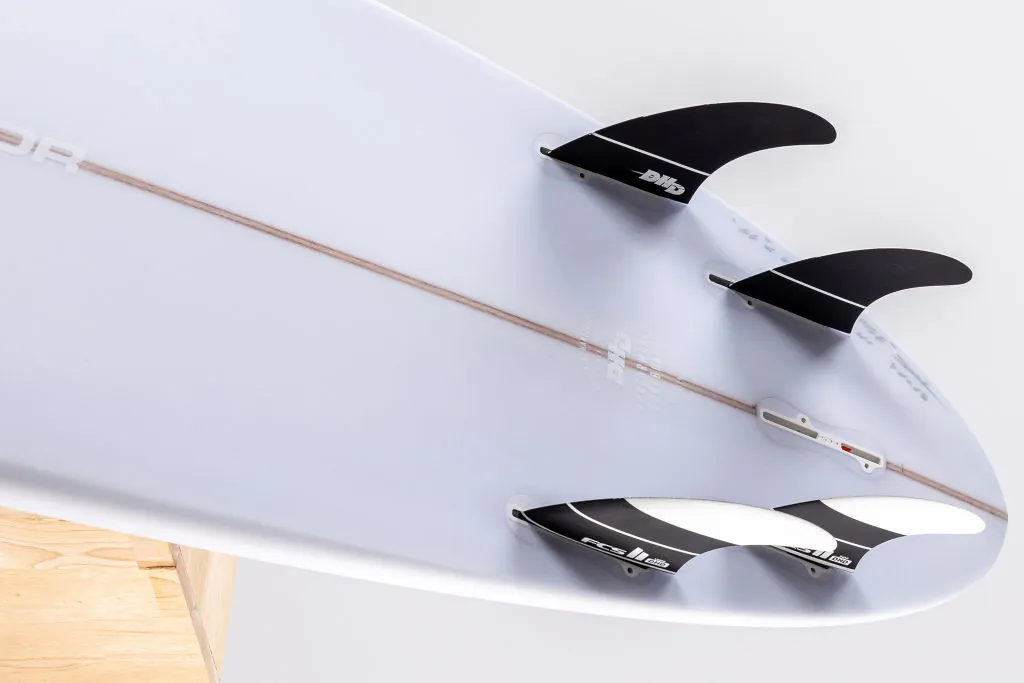
Fins are your navigation system on the water, providing you stability and control. Surfing without fins will leave you sliding and turning over the surface of a wave without control. Same as the previous subjects of the board, different fins, fin boxes, and fins setups will significantly change your surfing experience.
A fin box is where you attach the fins to your board. Surfboards can have two different types of fin boxes. It’s important to know which fin box your board has since Futures fins will not fit in an FCS box.
FCS: FCS stands for Fin Control System and is the most used and successful fin system in the world. The fins have two plugs that are secured to the board using a set of screws. The company also launched the FCS II keyless Fin, meaning fins can be installed or removed without screws or a key. Popular for quick and easy fin changes, allowing adjustment to different surf conditions.
Futures: Known for strength and durability, the favourite of many professional surfers and becoming more popular. They have a single, long tab running along the whole length of the base of the fin, secured with a screw. They are easy to install, and less likely to damage the fin box.
The Different Fin Setups
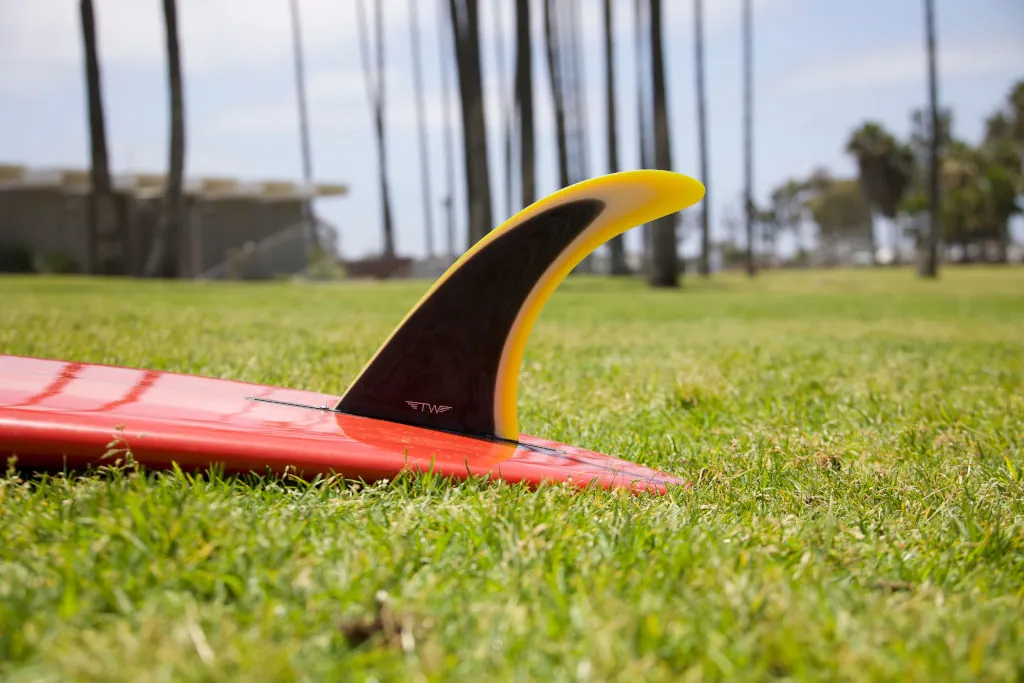
Single Fin:
A classic and stable set-up. Great for smooth, flowing rides, mostly used on longboards and old school, retro-style boards.
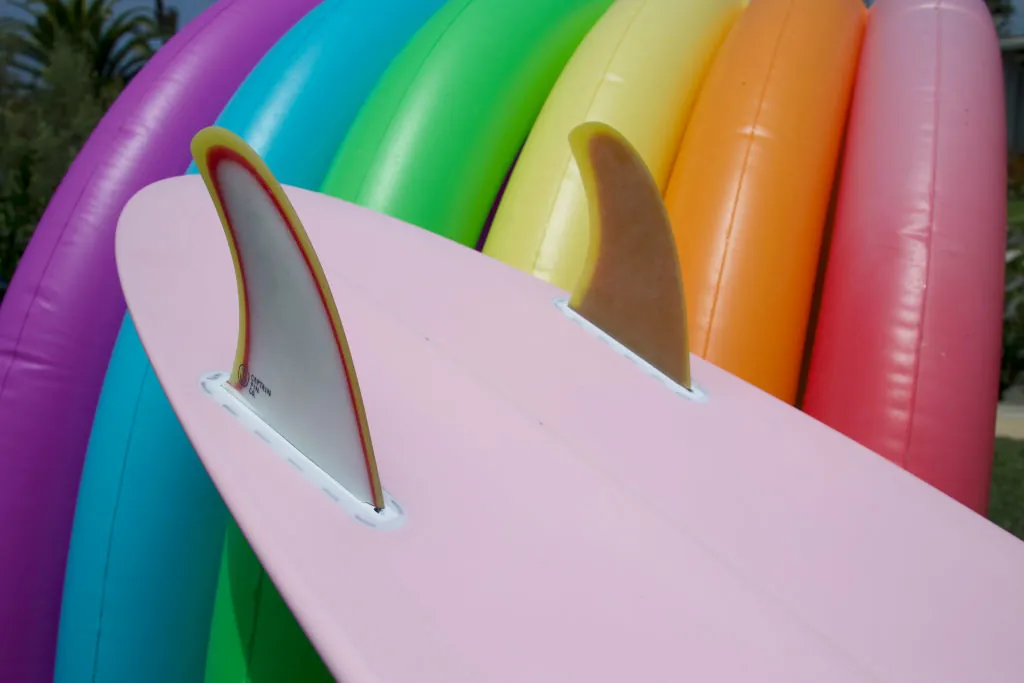
Twin Fin:
Two fins make your surfboard manoeuvrable, fun and more playful. Not ideal for big waves, but perfect for a more flowing feeling and speed, commonly found in fish-style boards.
Thruster (Tri-fin):
The most common setup is with three fins, offering a balance of speed, control, and manoeuvrability, suitable for a variety of surf conditions for fishes or longboard rides. The thruster configuration also gives you options – ride with a twin or single fin if you want!
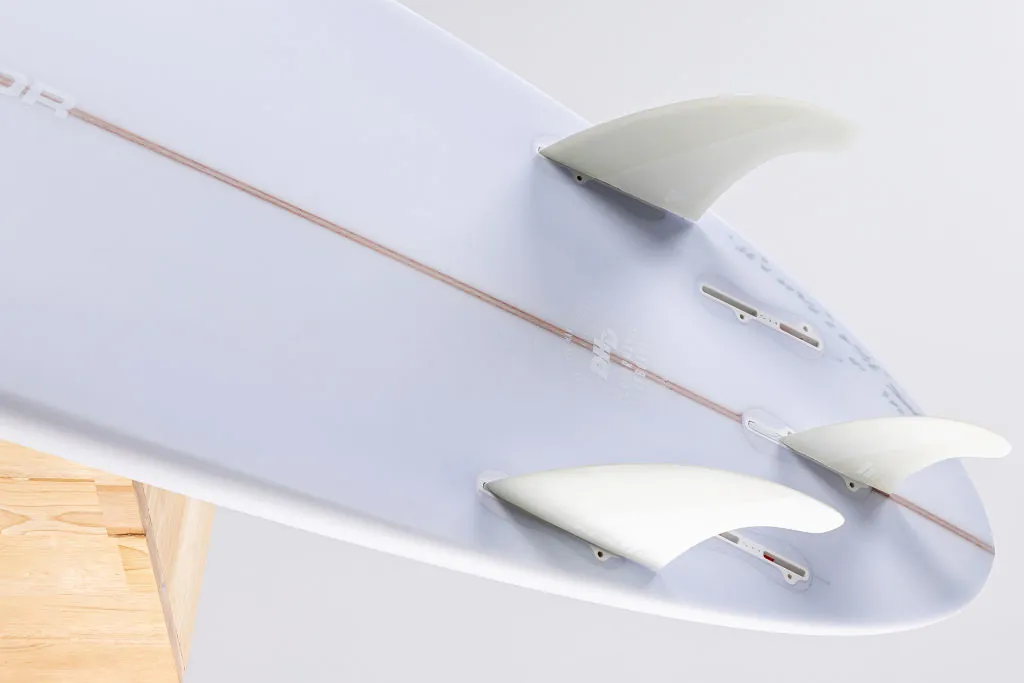
Quad Fin:
The quad fin setup is a four-fin setup and provides excellent speed and control. Depending on the shape of the board the quad fin setup can give speed in small waves or hold in bigger waves.
The Leash: Your safety line
A surfboard leash is your lifeline in the waves. This essential accessory keeps you connected to your board, preventing it from drifting away when you catch that wipeout and hitting other surfers with your board. The leash ensures a quick and effortless recovery, allowing you to focus on the next wave rather than chasing after your board after you lost it.
Don't lose your grip: Wax & Tail Pad
Wax is a surfer's best friend and essential for your surf. It gives you a grip and creates traction for your feet on your board. The wax also stops you from slipping off when you're paddling out to the waves. Make sure you use wax while you are preparing for your surf session and remove your old wax once in a while.
When it's time to take your surfing to the next level, a tail pad becomes your secret weapon. This accessory, placed on the rear end or the middle of the board, will give you grip and control, ensure you can do more aggressive turns and movements without worrying about slipping off. They come in a variety of forms and colours to choose from.
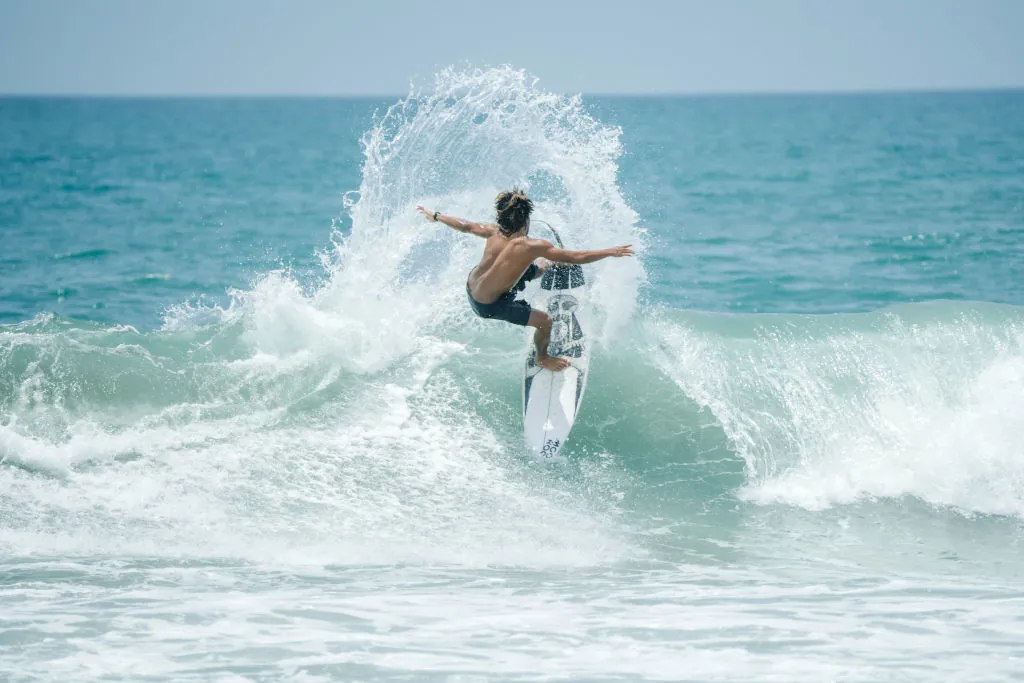
With a lot of different waves come varied boards and features. At Kima, we will help you with the right choice of your board. Our extensive range of surfboards from top-quality brands, including our 5-star quiver boards, ensures there's a perfect match for every surfer!
Ready for your next adventure?
BOOK NOW!