


How to Read a Surf Forecast
About Swell, Wind and Tides
Surfing is not only about the right technique, body awareness and strength, it also requires a lot of theoretical knowledge, which is important to catch the waves and ensure your safety in the water.
The nuts and bolts for a good surf session, are good conditions. Without waves, no surf. That is clear. Too small waves can be too boring. Waves that are too big can be dangerous. Being able to read the surf forecast is therefore extremely important in order to be at the right surf spot at the right time. With your phone in your hands, you can pretty much understand what will happen in the next week and prepare yourself to be out there on the best day possible.
We’d recommend the surf forecast of Surfline or Windguru.
To read a surf forecast is a skill that every surfer should have and we will help you to learn it. The forecast is the combination of the Swell, Swell Height, Swell Period, the Wind and the Tides. Let us go through it step by step.

What is a Swell?
A swell is a series of mechanical or surface gravity waves generated by distant weather systems that propagate thousands of miles across oceans and seas until they reach the coast and break, making it possible for us to surf.
The Swell Height
The swell is indicated in swell height which refers to the average size of the swell out at the sea. The swell height is measured by ocean buoys. The NOAA (National Oceanic and Atmospheric Administration) is an American organisation responsible for deploying and operating weather buoys to collect data, such as wave height, swell period and direction, wind speed and direction, air and water temperature, and barometric pressure.
The swell height is measured from the peak of the wave to the base, and the seconds between one peak (to have an average) and the next using historical and real-time data gathered from the offshore buoys.
There are two main units of measurement: foot (ft) and meters (m).
1ft = 0.3m
Depending on where you are, you might find yourself more familiar with one unit or the other. Most surfing forecast applications have the option to choose which unit you prefer.
Primary Swell vs. Secondary Swell
Swells can be categorised as primary, secondary, and even tertiary swells, but they rarely influence one specific surf spot at the same time. This happens when different storms in different locations of the ocean are generating swells that will arrive in a particular location.
To make it simple: the primary swell is swell with more potential to reach the coast and the secondary swell is swell with the second most potential to reach the coast. If a primary swell and a secondary swell are moving in the same direction towards the same coastline and surf spot, these two swells might combine and generate even larger waves.
Swell Period
The swell period is the time that it takes for one wave to pass a fixed point in the ocean. This time determines how fast a swell will propagate across the ocean. In deep water, long-period waves travel faster than short-period waves, as a result when they hit shallow water they slow down more abruptly and break with more power. The general rule is that longer swell periods carry more energy and as an effect, the waves will break larger and stronger compared to a short-period swell.
1 to 5 second period: Normally caused by local winds. The main characteristics of this swell period include bumpy, choppy, and weak waves.
6 to 8 second period: Typically caused by regional wind swells. Some characteristics include more organised waves, more power, and better-shaped waves.
10 to 16 second period: Commonly called groundswells. These swells are generated at a considerable distance from the coast by powerful storms. The characteristics of this swell period are powerful and define sets of waves.
16+ second period: Extremely powerful period and only certain surf breaks can hold such a strong swell. This swell period can create big waves, with high quality, and is not safe for beginners due to its power.
Swell Direction
The swell direction is the direction of where the swell is coming from, and that will depend specifically on the geography of the surf spot you want to surf. In Bali for example, the best swell direction is south-west swells generated from the South Indian Ocean. The angle of a swell will determine how the waves will break in a specific spot. Depending on the type of break (reef break, beach break or point break) the surf in one area might be completely different from another location in the same region and coastline.
How the Wind affects the Surf
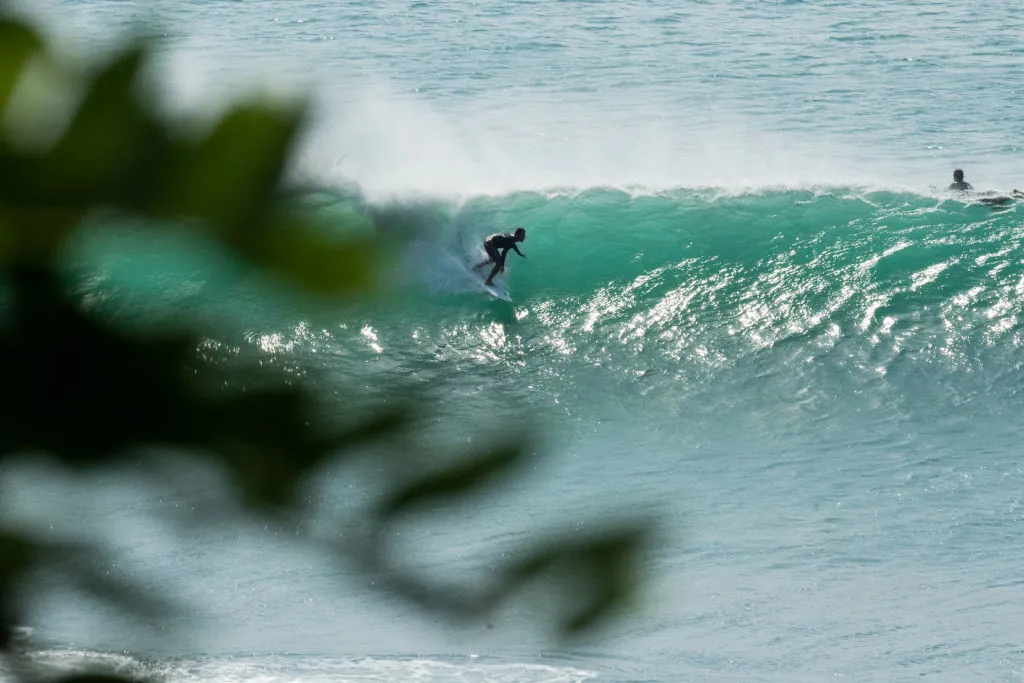
Like the swell also the wind has different directions. It works in the same way as the swell direction. In a surf forecast, you see the direction the wind is blowing from. Depending on the geography of the spot, the preferred wind direction also changes.
The wind speed can be measured in knots (kt), kilometres per hour (km/h), and miles per hour (mph). You can also choose which unit you’re more familiar with to better understand how much the wind will affect the conditions.
In general, there are three main types of winds:
1. Offshore Winds:
Winds that blow from land to ocean. This is the type of wind that surfers like the most. It creates a clean and many times (at specific spots) barreling wave.
2. Onshore Winds:
Onshore winds are winds blowing from the ocean to land. Surfers try to avoid these winds because depending on how strong they are, they can highly affect the waves and the line up and make it bumpy and choppy.
3. Cross-shore Winds:
These winds blow sideways. Most of the time in these conditions one side of the wave will be more affected than the other and depending on how strong it is it can become difficult to surf the side facing the wind.
What are Tides?
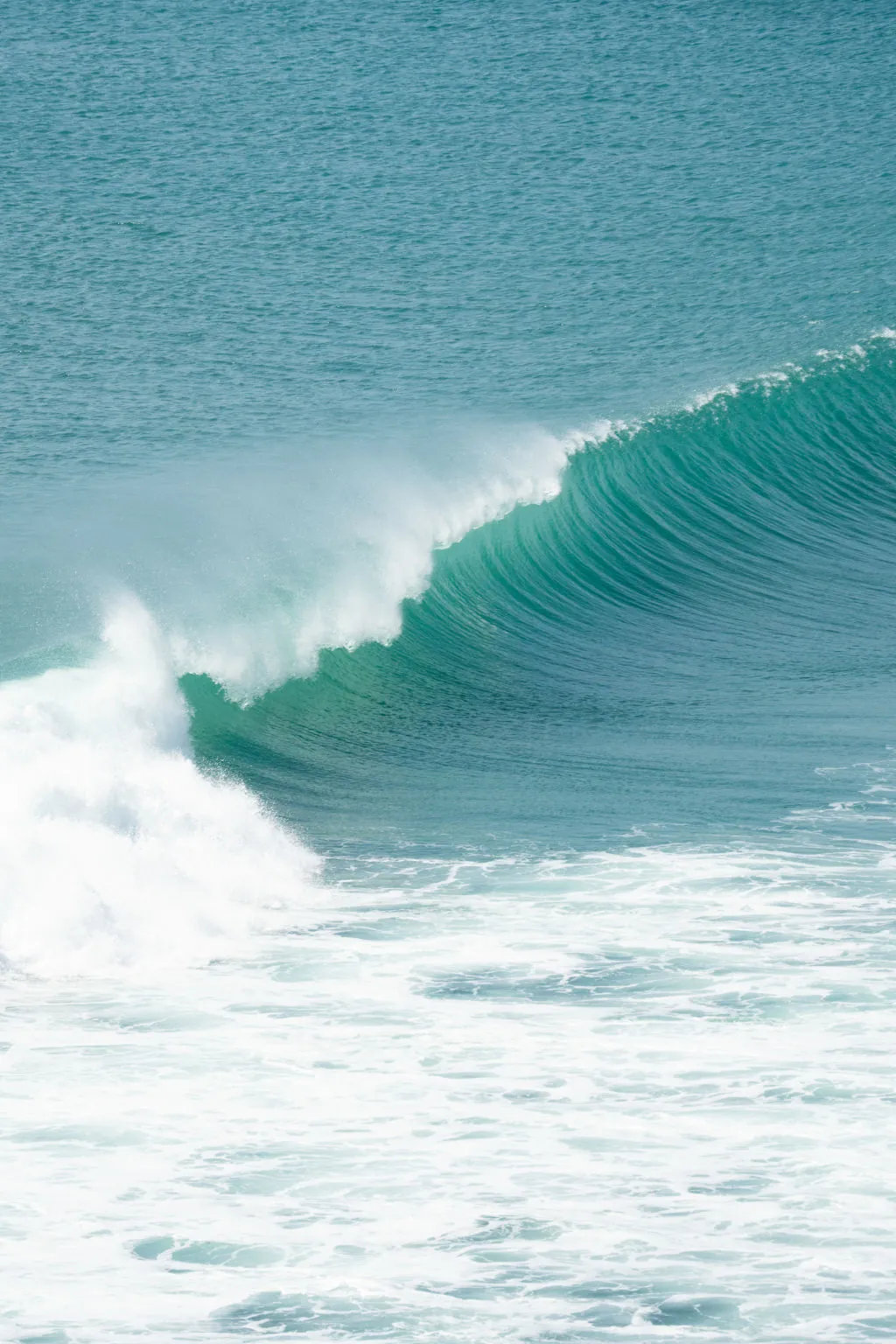
Tides are the rise and fall of sea levels caused by the combined effects of the gravitational forces exerted by the Moon and are also caused by the Earth and Moon orbiting one another. There are 2 cycles where you can find the tides:
Spring Tides: A spring tide will occur when there is a new moon or full moon. With the moon and the sun roughly aligned, the tides on Earth are larger than usual.
Neap Tides: Neap tides refer to a period of moderate tides when the sun and the moon are at right angles of each other.
How do the Tide changes affect the Surf Conditions?
In surfing, there is a popular concept called the “tide push” or “tidal push”. The idea is that an incoming tide is pushing more water toward the beach, so this energy should combine with wave energy to make larger waves. In locations with very abrupt changes in bottom topography, waves can completely disappear during certain tide heights.
Because waves break in water that is approximately 1.25 times as deep as the waves are tall (for example, an 8-foot wave will break in 10 feet of water), if bottom topography consists of a flat shelf of rock that abuts a cliff, waves will only break during the few minutes each day that the water depth is equivalent to 1.25 times the height of incident waves.
On higher tides, the waves would just slam into the cliff without breaking, and on lower tides, they might break right onto the edge of the rock shelf as a slab wave. On even lower tides, the reef might be fully exposed to the air with no water above it, and waves will just hit the edge of the rock without really breaking.
Figuring out what works for your favourite spots comes with experience. Some are better on high tides, some low, some outgoing, some incoming, and some are generally unaffected. Get to know your spot and you may find yourself with an empty, fun session when everyone else thinks the tides are no good. In our Kima Surfsession Planner, you’ll find a surf spot introduction for every spot, which contains exactly this information to match you with the right waves.
Your Kima package also includes our surf theory lessons, where we explain to you how to read your surf forecast, the surf etiquette, show you the different surfboard types and much more.
BOOK YOUR KIMA PACKAGE NOW