

Must See Temples In Bali
Explore Bali's Spiritual Heart
Explore Bali's Spiritual Heart Bali, the "Island of the Gods," is a paradise for beach lovers, surfers, adventurous souls and cultural beasts. With Hinduism being the predominant religion, you’ll find many beautiful and interesting temples around the island. With more than thousands of temples, it can be hard to decide and overwhelming which temples to visit during your stay. We made a selection for you that you should visit when you visit Bali for a holiday!
Three Tips Before Entering a Temple
Visiting a temple in Bali is an incredible and interesting experience, but it's important to remember that these places are sacred. Here are a few simple tips and etiquettes you should know before you visit a temple.
Dress respectfully: Wear a sarong to cover your shoulders and knees. Usually, you can borrow a sarong at the entrance of a temple.
Remove your shoes: shoes are generally not permitted inside a temple. So always check if you have to remove your shoes before entering a temple.
Be mindful of your surroundings: Speak softly, avoid loud noises, and be respectful of those who are praying or working in the temples.
Special rules for women: Due to ancient beliefs, women who are on period and women who had just given birth are not allowed to enter the temple.
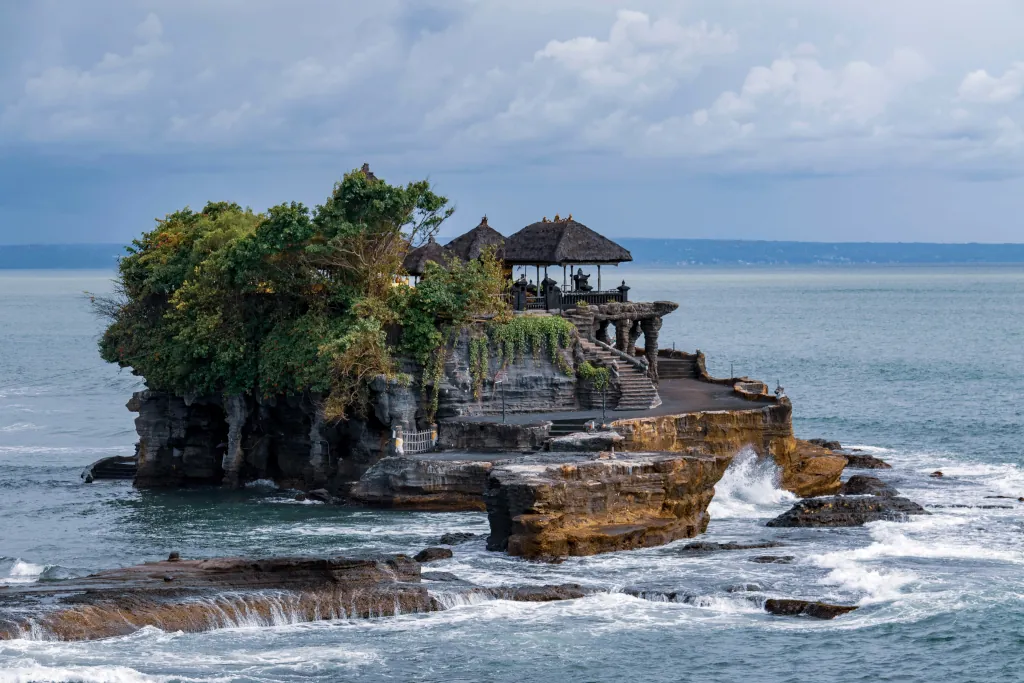
Tanah Lot Temple
A temple that is located on a rocky islet, a small island off the coast, is Tanah Lot. This is one of Bali's most iconic temples, meaning ‘land in the middle of the ocean’. Tanah Lot, built in the 16th century, is dedicated to the sea god, Dewa Baruna. The best time to visit is at sunset and during low tide, so you can easily access the temple. When it’s high tide, the way to the temple is covered in water, but there are usually some small boats that can bring you closer to the magnificent temple.
With occasional ceremonies held by the local Balinese people at Tanah Lot, it’s easy to feel a spiritual connection with their culture, religion and traditions.
And for the surfers among us? Right in front of Tanah Lot you can find a challenging yet rewarding surf break, perfect for intermediates and advanced surfers. It’s a lefthander wave and the temple will be your backdrop, an experience like no other. While Tanah Lot is a popular tourist destination (especially during sunset), this surf spot often stays uncrowded, so you can enjoy the waves in peace.
At Kima Surf, we also offer day trips to Tanah Lot. Perfect for you to explore this temple by yourself. And after a day of exploring, treat yourself to a delicious traditional meal like nasi goreng, gado-gado, a sweet treat like klepton, or a refreshing coconut water, pure happiness!
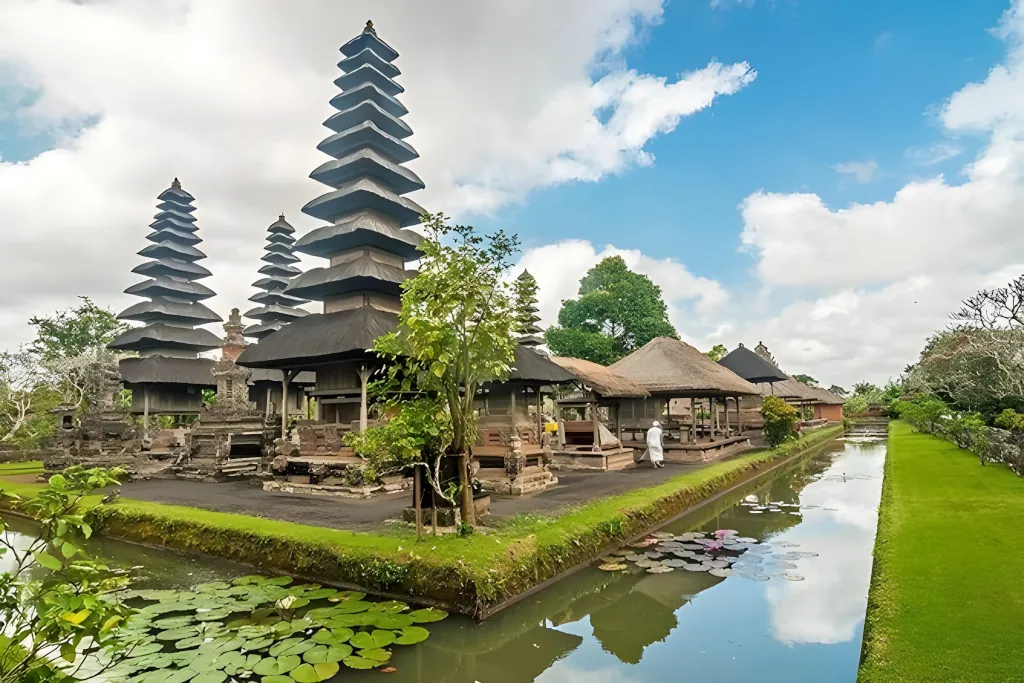
Taman Ayun
Prepare to be amazed by this temple, Taman Ayun. Located in Mengwi, Badung, which is an area away from the busy tourist hotspots, this temple is surrounded by green gardens with trees, blooming flowers, and lotus-filled ponds. Built in the 17th century, this temple was for the royal family in Mengwi, a place of worship. The name "Taman Ayun" itself means "Beautiful Garden," and trust us, it lives up to it! The way they've combined the complex architecture with the gardens is just incredible.
Taman Ayun is more than just a single temple, it's like a small village, with detailed architecture, high pagodas, and a calming atmosphere. The area shows the deep connection between spirituality and the natural world that is so central within the Balinese culture. Visiting Taman Ayun is a whole day trip itself and an opportunity to experience the beauty of this sacred place!
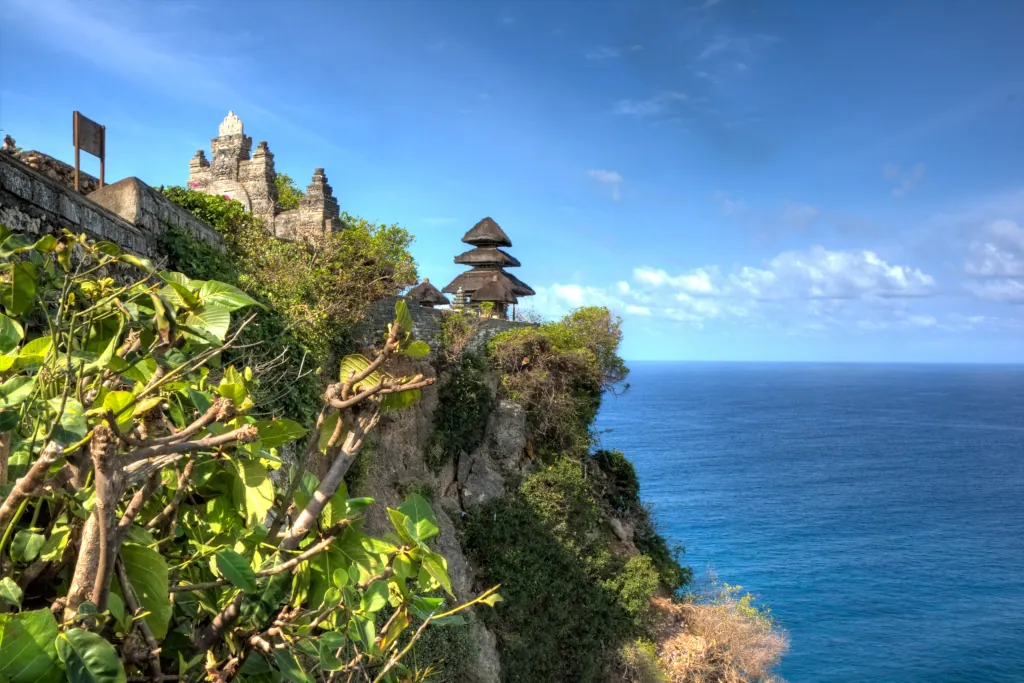
Uluwatu Temple
Next up is Uluwatu Temple, or as the locals know it, 'Pura Luhur Uluwatu'. This famous temple, located in Uluwatu, on a cliff overlooking the Indian Ocean, is one of Bali's most important sea temples. Built in the 11th century, it's believed that the powers of the three Hindu gods (the Hindu trinity), Brahma, Vishnu, and Siva – unite here. Making it an important place of worship for Siva Rudra, the Balinese Hindu god of all elements and aspects of life.
Hindu gods (the Hindu trinity), Brahma, Vishnu, and Siva – unite here. Making it an important place of worship for Siva Rudra, the Balinese Hindu god of all elements and aspects of life.
You'll notice some unique features at the temple such as the reliefs on either side of the split gate of the temple. These “wings” guard the temple. The temple is also guarded by a more playful guard – the local monkeys! The local people believe that they keep the bad influences away. In reality, these cheeky monkeys tend to grab anything that is unattended, like bags, food or sunglasses. So be aware when you visit the temple!
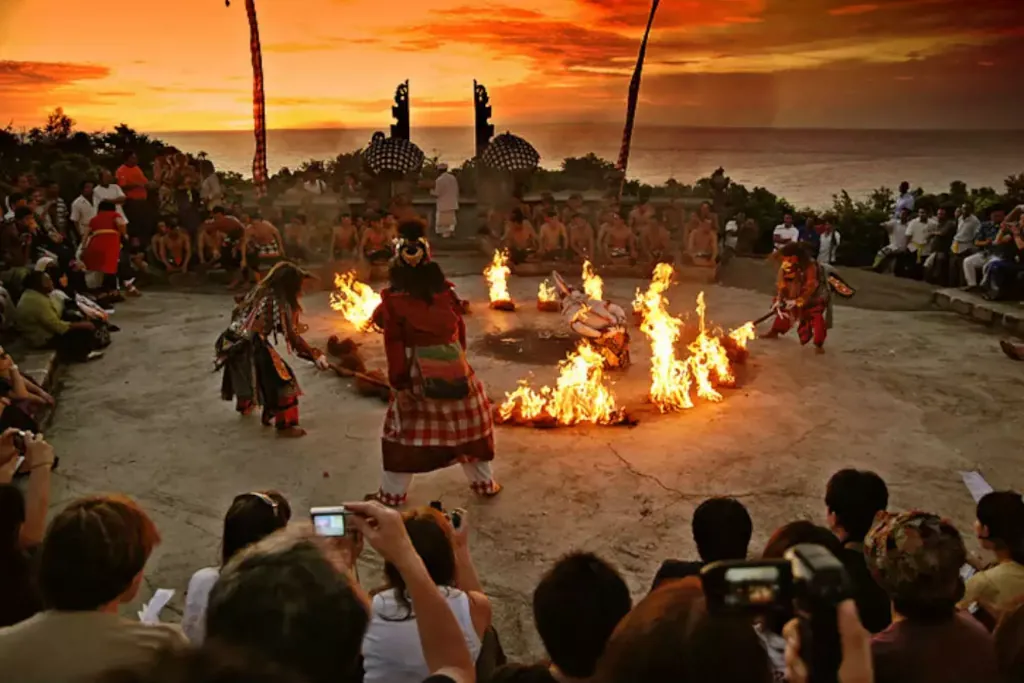
One of the biggest draws to the Uluwatu Temple is the popular Kecak fire dance performance, held twice a day during sunset. This traditional Balinese dance involves 50-60 men chanting and dancing rhythmically, with 10 to 15 dancers who are playing a more significant role during the play. Together they’re creating a real show. While you watch, the sun begins to set and the sky is turning into bright colours. Even though you’ll definitely come across lots of other tourists, it's a great experience!
Pura Besakih Temple
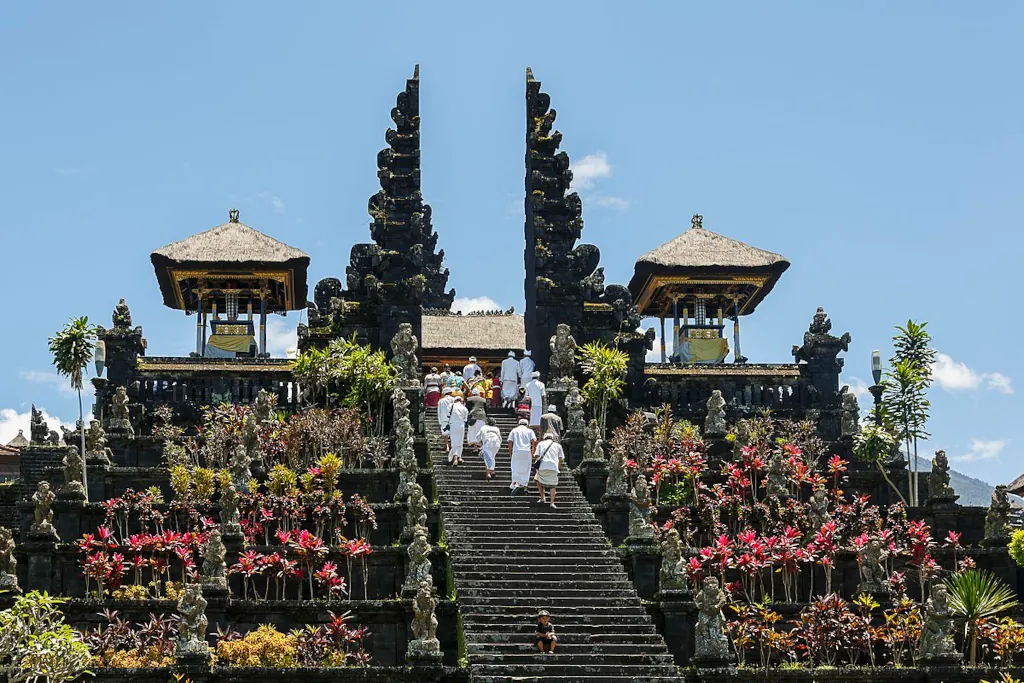
Pura Besakih, the mother of temples, is with more than 1000 years the most important, largest, and holiest temple of Balinese Hinduism. It’s a grand complex of at least 86 clan temples and shrines, located on the south-western slopes of Mount Agung (the highest peak in Bali). Since each shrine has its own annual anniversary, at least 70 celebrations take place at Besakih every year.
Pura Besakih has 3 main temples dedicated to the Hindu trinity. With the most popular one for the public in the center, called “Pura Penataran Agung”. This temple has white banners for the god Shiva, the destroyer. “Pura Kiduling Kreteg” (to the right of the complex) features red banners for Brahma, the god who is known as the creator. And “Pura Batu Madeg” represents Vishnu, the preserver, with its black banners. As in most temples, only Balinese Hindus are allowed to go inside, but if you are lucky, you can have a glance at the inside through the gates.
A visit to this temple complex could easily be a day trip, and with a small entrance fee (that comes with a local guide) you can learn a lot more about the temples. With interesting facts about the history and why it’s culturally important in Bali.
Goa Gajah
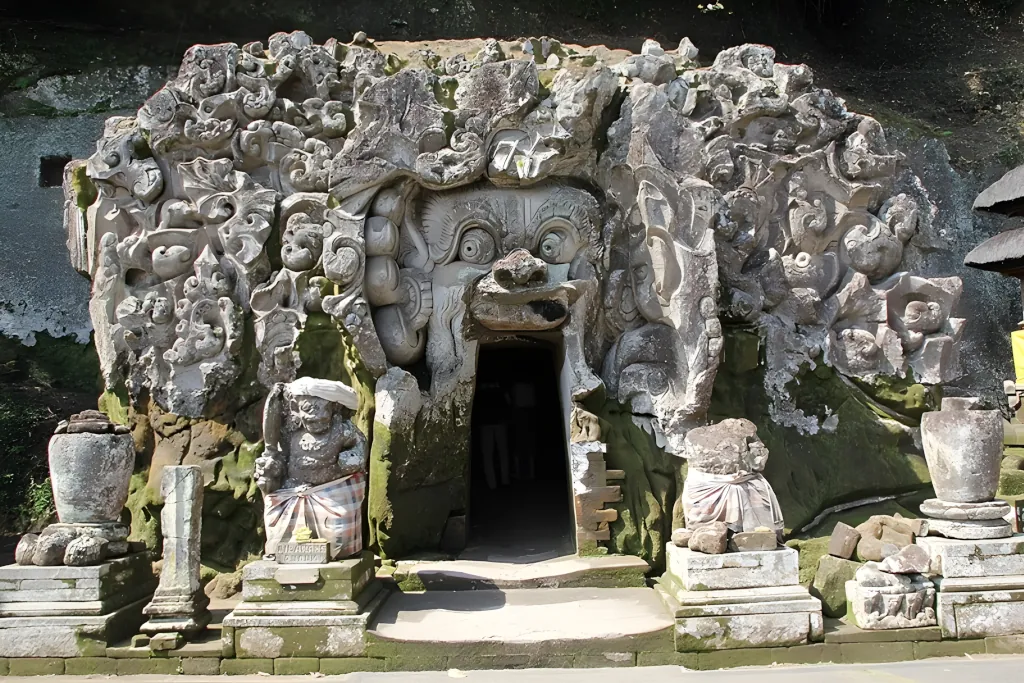
Goa Gajah, also known as ‘The Elephant Cave’, is a unique temple and archaeological site around 15 minutes East from Ubud. This shrine dates back to at least the 11th century and was rediscovered in 1923 by Dutch archaeologists. Nowadays it is used mostly as a Hindu shrine, but the temple has both Hindu and Buddhist elements, which is remarkable. The exact origins of the cave are unknown, but it is believed that it was originally built as a place for spiritual meditation and religious ceremonies. And fun fact: despite its name, the cave has no associations with elephants!
You enter the cave through the giant yawning mouth of a creature. It’s said to represent either Bhoma (a guardian against evil spirits) or Rangda (an evil witch) from Balinese mythology. Besides the cave itself, which is the main focus, you'll find a large holy bathing pool overlooked by six statues that also function as fountains. The locals use the fountains to perform Melukat, a cleansing ritual of the mind, body, and spirit. And behind the pool, you’ll find a huge kapok tree, decorated with a “saput poleng” (a black and white checkered fabric in Bahasa) showing that the tree is sacred.
Beyond the cave and the holy pool, you can explore the "Tukad Pangkung" area, where you’ll find Buddhist shrines and lovely green trees and flowers.
So, it’s time to take a break from surfing and explore the rich culture of Bali! Visiting these temples is a really interesting experience and a great way to learn more about the Balinese culture. Trust us, you won't regret it!
Book Now