

El Niño 2026: Bali & Sri Lanka
What Surfers Can Expect
El Niño is back and appearing in the headlines. If you are planning your surf trip to Bali or Sri Lanka it is worth knowing what El Niño has in store for 2026/27.
With El Niño strengthening throughout 2026, we can expect to see changes in rainfall, weather patterns and conditions across the tropics. For surfers this does not guarantee bigger swells and consistent surf, however it does mean weather around the waves could change which can create more or fewer opportunities to make the most of the swell.
What does this mean for Bali’s upcoming wet season and Sri Lanka’s dry season? Here is all the information surfers and travellers need to know!
What is El Niño?
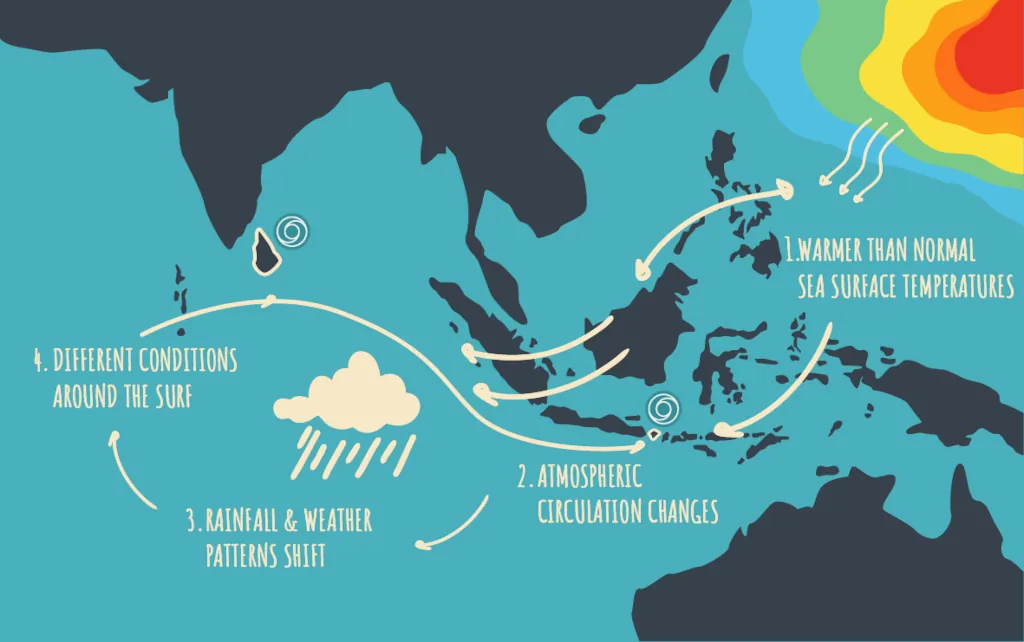
El Niño is a recurring climate pattern involving unusually warm sea-surface temperatures in the central and eastern equatorial Pacific, together with changes in the atmosphere above it. These changes alter large-scale atmospheric circulation, which can influence rainfall, winds and weather patterns far beyond the Pacific.
It is important for surfers to know that El Niño does not create waves, it does not directly determine daily surf, but it can alter storm tracks, winds and swell-generating weather systems. Swell travels from distant weather systems and how the wave shapes when it reaches the coast depends on local wind, tide and swell direction. El Niño influences the weather window around the swell so in some places it can decrease rainfall which means drier and more settled conditions, and more usable time outdoors.
El Niño is not a daily forecast but rather a climate system, it changes probabilities and does not guarantee good surf.
Bali
What does this mean for Bali’s wet season?
Indonesia is already experiencing a strong drying signal. In early August 2026, 90.79% of the country was experiencing low rainfall, with 87.28% below normal. BMKG currently forecasts a continued dry pattern through September–November, with Bali showing a high probability of less than 50 mm of rainfall in September and October.
For Bali this has brought less rainfall and a pronounced dry season this far. But what can we expect to see in Bali’s wet season? If the El Niño continues Bali can expect to have a longer period between rainfall events and dry conditions. Tropical rain, thunderstorms and sudden showers can still happen but for travellers, the possibility of more settled weather windows is certainly something to get excited about.
What does this mean for Bali’s surf?
This is where it gets interesting for surfers, as we mentioned before El Niño doesn’t create bigger waves, more waves, or any waves for that matter. Swell-generating weather systems over the Indian Ocean do that. What El Niño does is change the weather window around the swells.
Typically in Bali’s wet season the trade winds shift and favour the East Coast surf spots over the West Coast surf spots, and rain and thunderstorms cause unpredictability. However if El Niño persists it could make the wet season drier and potentially delay or weaken the seasonal transition, creating more variable windows.
If El Niño persists, Bali could see longer breaks between rain and more settled periods as the wet season develops — potentially giving surfers more clean weather windows around incoming swells.
And this is where having a local surf team matters. You don't need to work out which side of Bali is working each morning — our surf guides follow the swell, wind, tide and local conditions and choose the best available surf spots for your group and ability.
Sri Lanka
What does this mean for Sri Lanka’s dry season?
The effects of El Niño on Sri Lanka is slightly more complicated than Bali because the climate pattern influences rainfall across the island, but its effects differ based on location and season so it is too simplistic to say it will just create a drier wet season (as in Bali’s case).
Sri Lanka’s weather is influenced by monsoons, which are seasonal winds that change direction and bring rain to different parts of the island throughout the year. El Niño can influence the strength and timing of Sri Lanka’s monsoons and this influences the amount of rainfall.
The effect isn't always the same. In fact, El Niño has historically been associated with increased rainfall in Sri Lanka during parts of October to December, while its influence on the Southwest Monsoon is much less consistent. Other factors, particularly conditions in the Indian Ocean, also play an important role.
For travellers, the takeaway is simple: El Niño can influence Sri Lanka’s seasonal weather, but it doesn't guarantee a wetter or drier surf season.
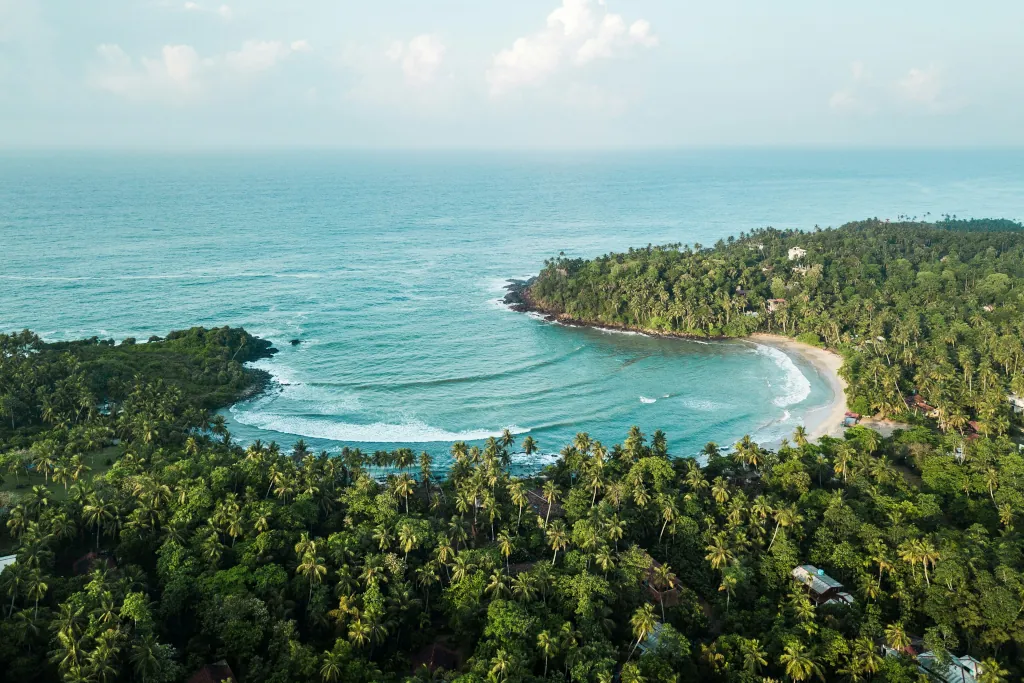
What does this mean for Sri Lanka’s surf?
Sri Lanka's south-coast surf season is not determined by El Niño. From around November to April, the south coast enters its main surf season, with seasonal winds becoming more favourable and Indian Ocean swells providing waves for a wide range of surfers. Weligama and Hiriketiya offer very different surf experiences within the same region.
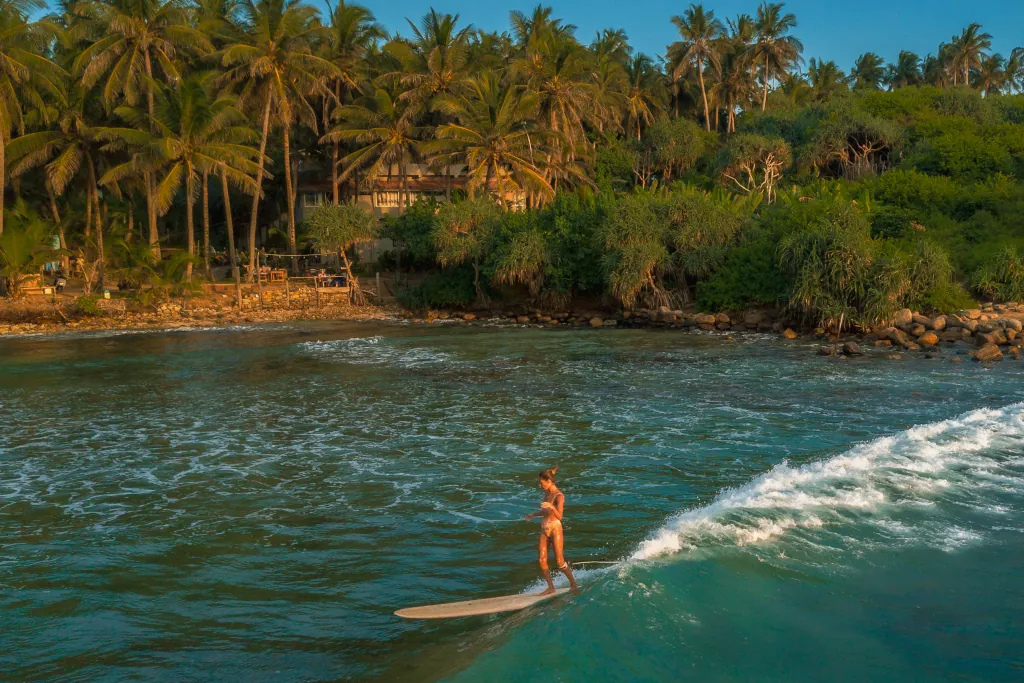
Weligama's long sandy bay is particularly suited to beginners and progressing surfers, while bigger swells open up more powerful reefs and points along the surrounding coast. Hiriketiya's compact bay can offer fun lefts and rights when the swell and tide line up, with nearby reefs providing more challenging options for stronger surfers.
El Niño doesn't generate these waves, but changes to the wider atmospheric and monsoon patterns can influence the weather and wind around them. If those conditions line up favourably, surfers could see more clean mornings, fewer weather interruptions and more opportunities to make the most of incoming Indian Ocean swell.
What Have Previous El Niño Years Looked Like?
We can look back at previous strong El Niño events to get an idea of what they have in store for Bali and Sri Lanka. Every event is different, but the history gives us some useful context.
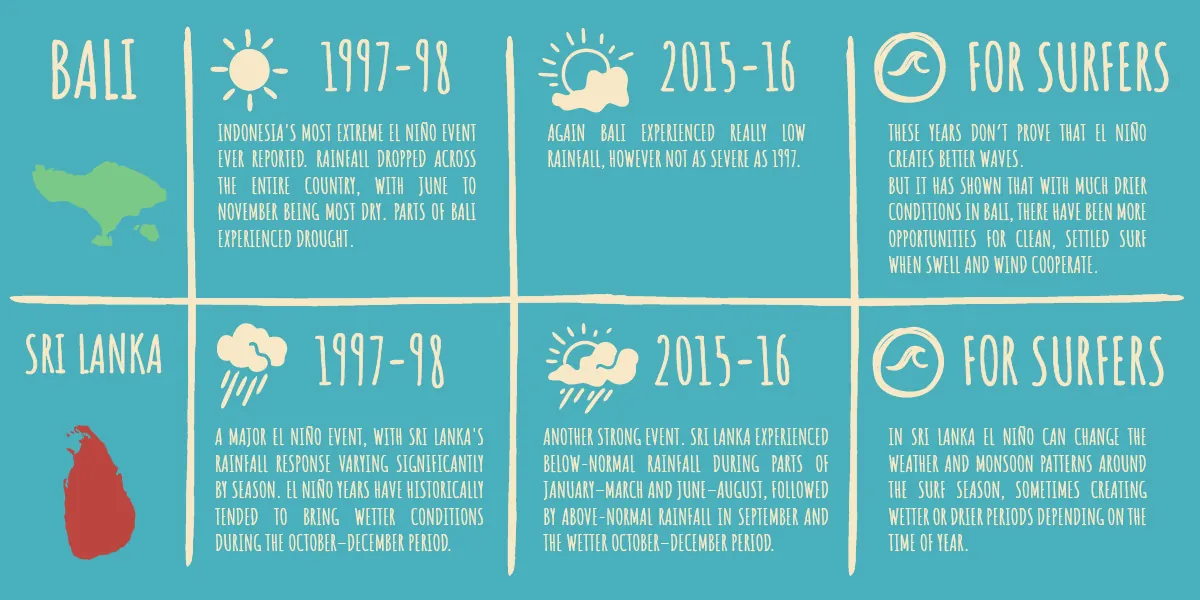
Looking back still doesn’t guarantee anything, each event is different. The current El Niño is developing strongly, but exactly how it affects Bali and Sri Lanka will depend on how the event evolves and how it interacts with other climate patterns.
For surfers, that's the exciting part: we know the climate pattern is strong — now we're watching to see what it means for the actual surf windows.
*Updated August 2026
Should Surfers Be Excited?
Yes - but with perspective.
El Niño does not guarantee anything, it does not guarantee consistent swells, perfect waves, endless sunshine or offshore winds. But it can shift the wider weather patterns around our favourite surfing destinations, and the current El Niño event is strong enough to make the coming seasons particularly interesting.
For Bali, the potential for a drier-than-normal wet season is exciting, this means more sunshine and less rain which is always great for surf travel. A few more settled weather windows could mean more chances to surf when the swell is working — and with Canggu, Seminyak and Uluwatu offering such different waves, there is plenty to work with.
For Sri Lanka, the potential changes are more subtle, but favourable changes in weather and wind patterns could create more clean mornings and opportunities to make the most of the Indian Ocean swell during the south-coast season.
The waves will always have the final say. But if the forecast gives us more opportunities to be in the water when the swell lines up? Well that is something to be excited about.
Tips for Planning Your Surf Trip During El Niño
1. Don’t let ‘wet season’ stop you from booking that trip
Wet season in Bali does not mean it rains all day, showers can be brief and followed by sunshine, with plenty of waves to surf and sunny days plus seeing in its most green and lush phase. With El Niño potentially bringing longer dry periods, there could be even more reason to consider a wet-season trip.
2. Pack for surf and sunshine
A passing shower is always part of the tropics so remember to pack a light rain jacket or waterproof layer.
3. Let Kima handle the surf logistics
You do not need to spend your holiday studying surf forecasts and the weather conditions, our experienced team in the surf department has this sorted. We take you to the best surf spots based on the daily conditions as well as your surf level.
4. Expect variety
One day can feature playful and cruisey conditions where the next can bring bigger swell and completely different waves. But with multiple surf spots in both Bali and Sri Lanka there is plenty to explore, and always a wave suitable for you.
5. Make the most of the dry weather windows
These drier weather windows can mean less rain and, when local winds cooperate, cleaner surf conditions, so this is the time to get your two daily surf sessions in.
6. Come for the season, not a single forecast
No climate pattern can predict exactly what your week will look like. That's the fun of surfing. Come with an open mind, let the local team read the conditions and make the most of whatever the ocean gives you.
El Niño could bring some interesting weather windows to the coming surf seasons in Bali and Sri Lanka. While climate patterns can influence regional conditions, they can never guarantee perfect waves. For travellers, though, the beauty of planning a surf trip is having the freedom to experience these destinations at their best — with plenty of time in the ocean, new waves to explore and an unforgettable adventure along the way.
Book Now