

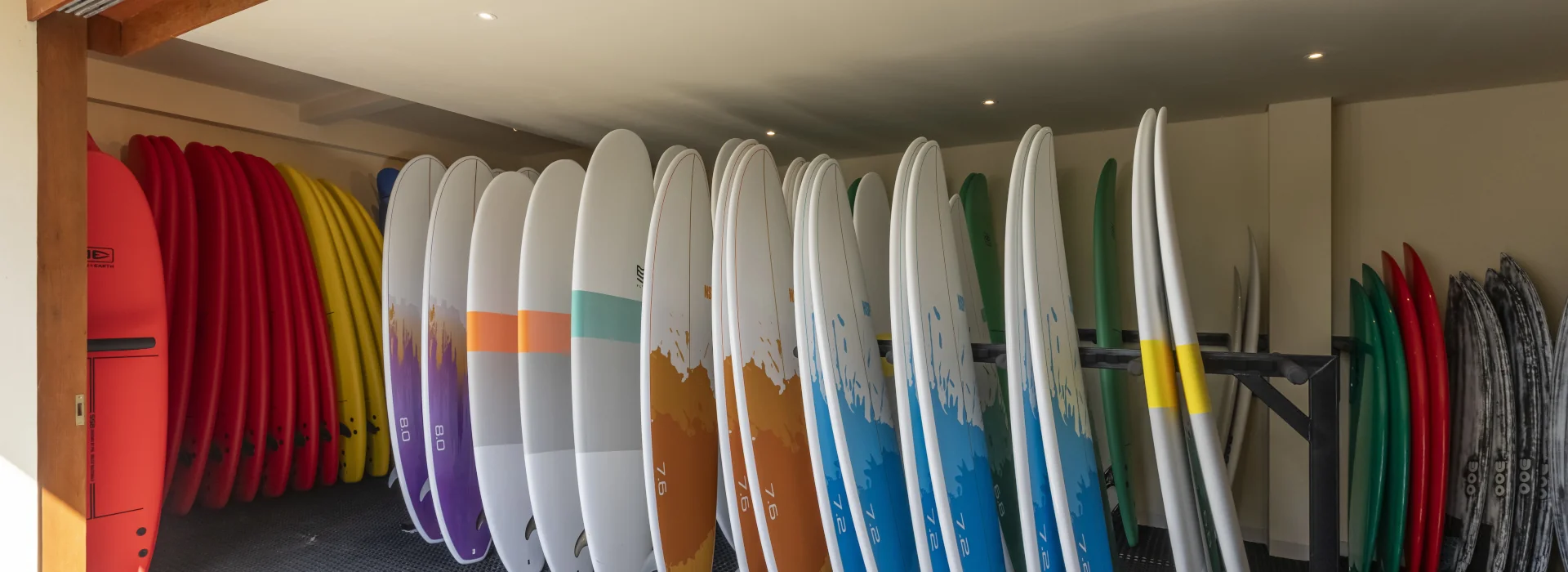
What Surfboard Should a Beginner Rent?
When you are learning to surf, riding the right surfboard makes all the difference. The right board helps you catch more waves, build your confidence and enjoy the process. A common mistake a lot of beginners make is downsizing too quickly. A shorter board may look good, but it can hinder your surfing progress, being harder to balance on and paddle into waves, making a good surf session a lot harder than it should be.
At Kima Surf Camps, we have a range of soft-top and beginner-friendly hard boards, with surf guides to help you find the right fit. Here's what to look for when choosing your rental board.
What is your surfing level?
Beginner surfers generally benefit from a generous-volume soft-top, selected with their guide according to weight, ability and conditions.
Before you rent a surfboard it is important to be honest with yourself about your surfing level. At Kima our six-star session planner makes this easy. We have 3 beginner surfer categories:
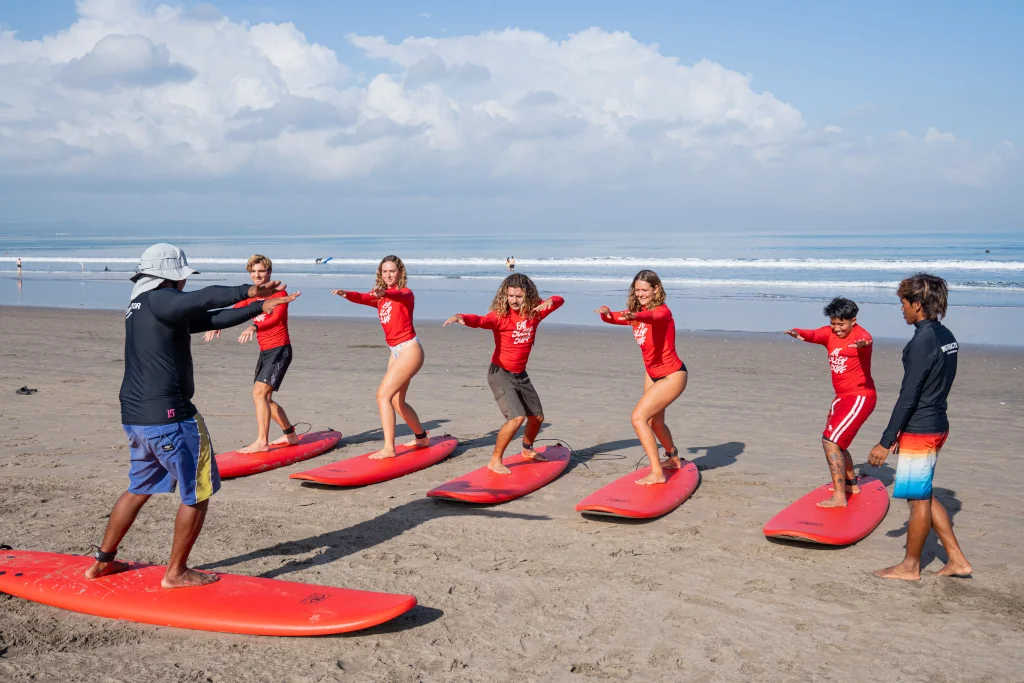
Complete beginner: never surfed before
If you have never surfed before we recommend you join our 5 Day Learn to Surf Course, which is part of our Kima Surf School. Our Learn to Surf course offers the most complete progression, combining surf theory, safety, technique, video analysis and hands-on coaching over five days.
For guests looking for more flexibility, drop-in beginner surf lessons and private coaching are also available. Once you develop the right foundations you can join Kima Surf Guiding, which includes our 6-star session planner.
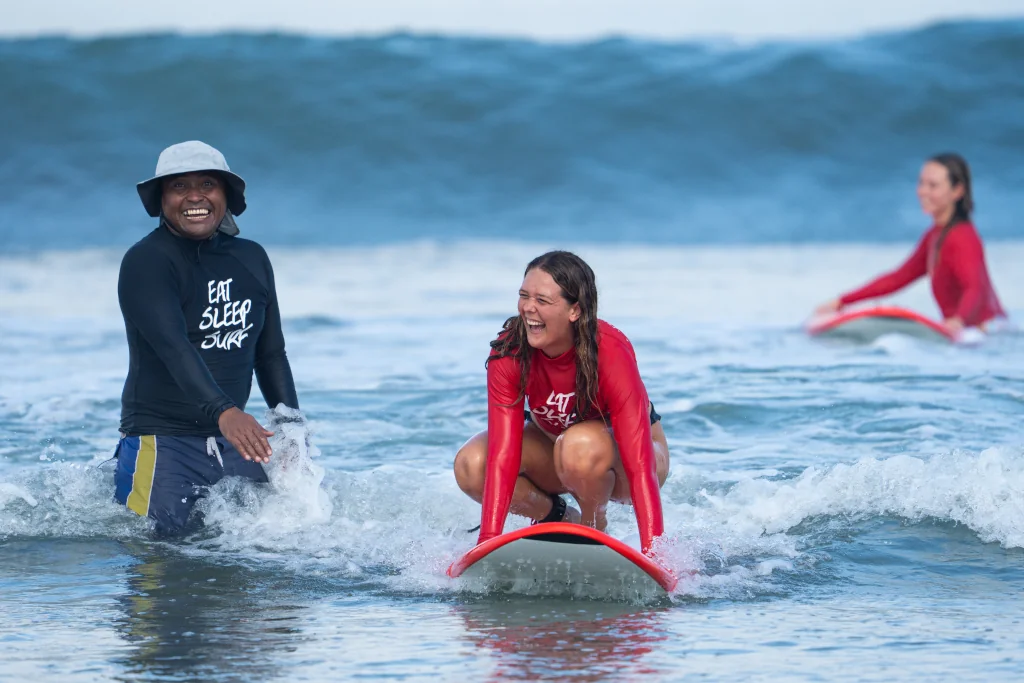
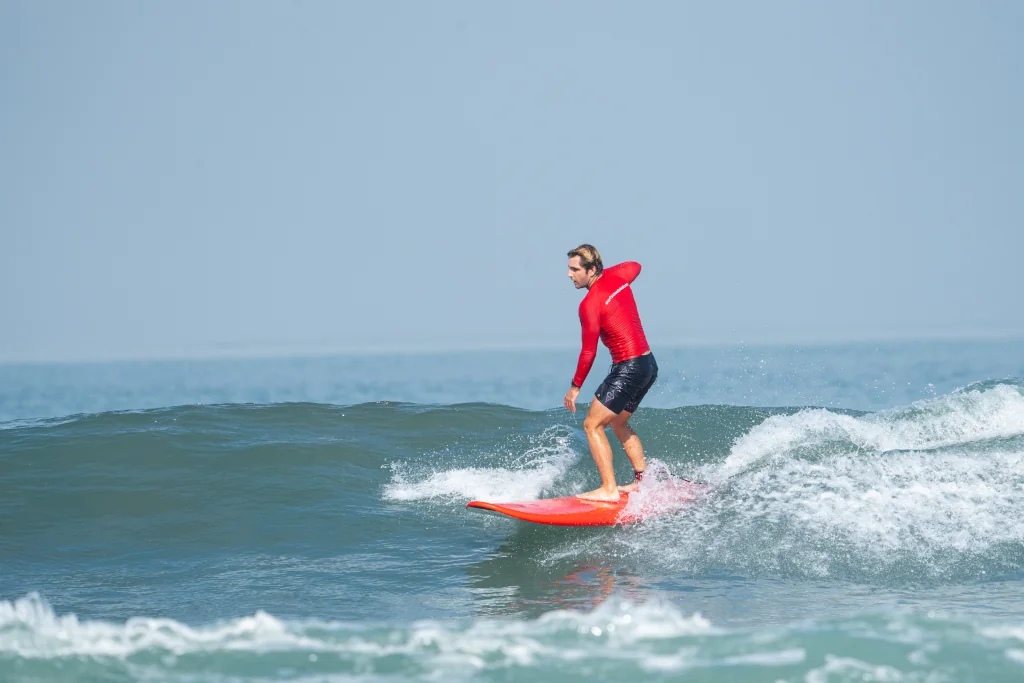
2-star surfers: catching green waves
You can start to join our 2-star sessions once you feel comfortable in deep water and have basic paddling skills, you can turtle roll under waves and are not throwing your board and you can paddle back to the guide after catching your wave. You'll focus on:
You'll focus on:
- Improving your paddling technique and resistance.
- Practising the turtle roll to paddle out.
- Improving your balance and learning to ride waves in both directions.
Now that you have a good idea about what level your surfing is at, it is time to match you with the right surfboard to get you moving up the star sessions as easily as possible! As a beginner you want a longer, wider and thicker board to help you catch waves easily, paddle effortlessly and float.
What size surfboard should a beginner rent?
| Surfing level | Recommended board | Recommended size |
|---|---|---|
| Complete beginner | Soft-top | 8 - 8,6ft |
| 1-star | Soft-top | 8 - 8,6ft |
| 2-star | Soft-top or high-volume hard-top | 7,6 - 8,6ft |
Please note these sizes are a starting point, not a strict rule. Your height, weight, fitness, board shape and surf conditions all play a part, so ask your surf guide for advice.
What is the difference between a hard-top and soft-top?
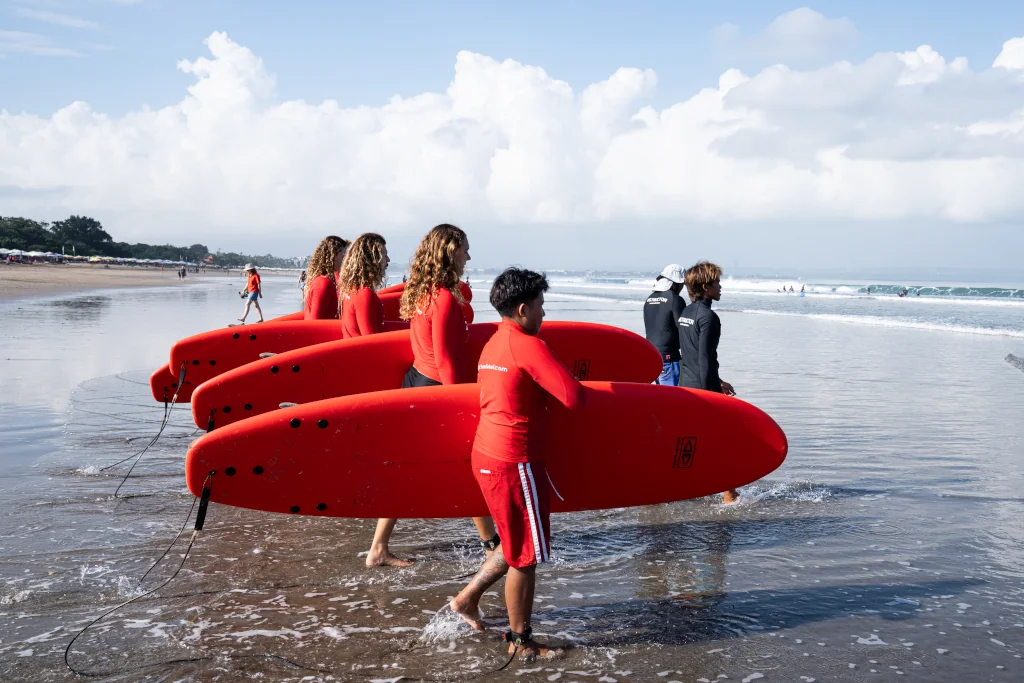
Soft-top surfboards
Soft-tops are also commonly known as foam boards or 'foamies'. They are large surfboards with a foam-covered deck and are a great choice for beginners. They offer stability and make it easier to practise paddling, balance and your pop-up.
Best for: Complete beginners and most 1-star surfers.
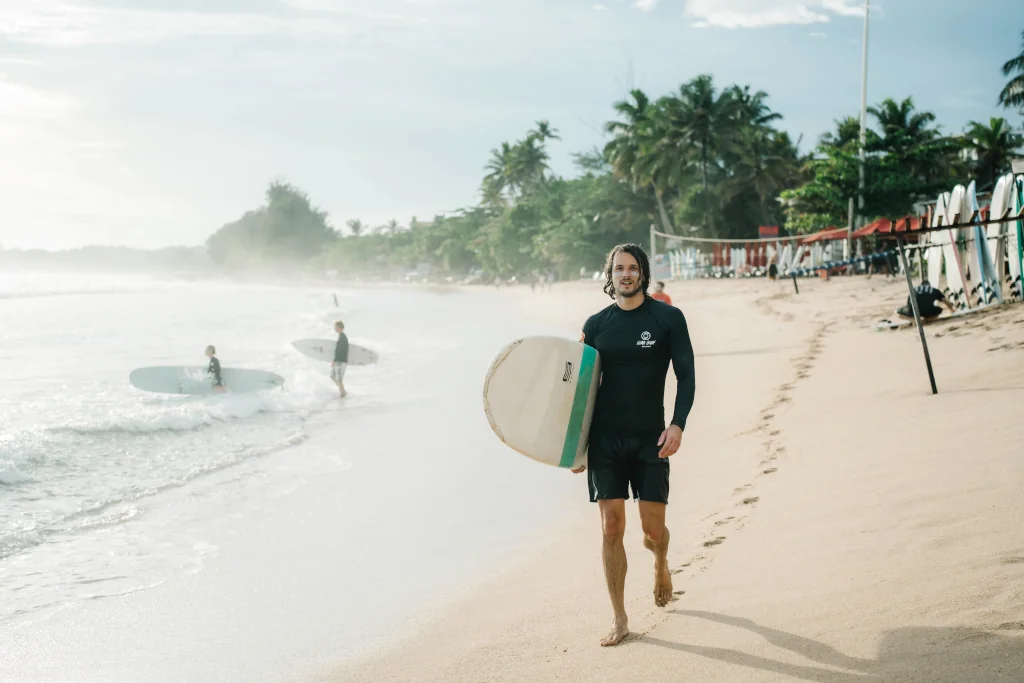
Hard-top surfboards
Hard-tops surfboards have a solid outer construction and come in a variety of shapes and sizes. Their buoyancy and stability depend on volume, width and shape. They can be a good next step for beginner-to-intermediate surfers who have developed good paddling skills, mastered the soft-top and are ready for a more responsive board.
Best for: Surfers with solid paddling skills who are ready to progress to a more responsive board and improve their green-wave catching and turning.
Worth knowing: Hard-tops can require better paddling technique and stamina, depending on the board’s design. Choosing the right size and volume for your ability is key.
At Kima, we have a range of soft-top surfboards in many different sizes, and NSP hard-top surfboards in many different sizes. For our more advanced surfers we have the Premium Surfboard Collection, which is a range of performance shortboards from top surfing brands including AIPA, KT SURFING, Gerry Lopez and more!
Our guests are welcome to bring their own surfboards. If you are curious about airline fees read our blog about: Airline Surfboard Fees to Bali and Sri Lanka.
Board rental and board insurance with Kima
Surfboard rental is included in the 5-day Learn to Surf School package, with board insurance covering all Learn-to-Surf sessions. For the Surf Guiding Program (from 1-star level onwards), surf sessions and transport are included in your Kima package, but surfboard rental and board insurance must be booked separately. You can choose from our range of soft-tops, hard-tops and premium surfboards, with our surf guides helping you find the right board for your level and goals. See our Board Rental and Board Insurance add-ons for details.
When to switch surfboards?
It may be time to downsize your surfboard if you feel like your current board is starting to limit your surfing. Do not rush this step. You may be ready to downsize to a smaller soft-top or transition from a soft-top to a hard-top. This is when we think the timing is right:
1. Downsizing to a smaller soft-top
You are not stuck on a massive 9ft soft-top forever. Once your paddling, balance and pop-ups improve you may find that you can handle a slightly shorter soft-top.
You might be ready to try a smaller size when you can:
- Pop up reliably on most waves and maintain your balance.
- Control your board and start turning left and right on the wave.
A smaller soft-top can give you more manoeuvrability, allowing you to turn more effectively while still offering the stability you need. Just don't rush it: if you're catching fewer waves or struggling to keep your balance on a wave, your current board might still be the better choice.
2. Transitioning to a hard-top surfboard
Hard-top surfboards come in different shapes and sizes so you do not need to downsize immediately. You may be ready to try a hard-top surfboard when you:
- Pop up consistently on your soft-top and ride waves to the left and right.
- Catch green unbroken waves on a soft-top and ride the wave down the line.
- Can control which direction you go.
- Feel the soft-top is stopping you from performing certain manoeuvres on the wave.
If you're surfing with Kima's 2-star sessions, a larger, high-volume hard-top surfboard is great for progressing beginners. Since hard-tops generally offer less stability and flotation than soft-tops, it's important to keep the length and volume up when making the switch. As your confidence and skills improve, you can gradually explore smaller boards. At Kima, our experienced surf guides will help you find the right board and make the transition at a pace that works for you.
Staying at Kima Surf Camps makes surfboard decisions easy. With our big range of beginner-friendly surfboards, as well as our experienced surf guides watching your progress in the water, we will ensure you are on the right surfboard for your surfing level, making your surfing journey as effective as possible!
Book Now