Top 5 intermediate surf mistakes
You’ve transitioned from beginner to the intermediate stage, now catching waves and paddling out with confidence, but something feels off. Progress has slowed, and you’re not sure why. This phase is common for intermediate surfers; more often than not, it comes down to a few small, crucial habits. Even though surfing is known as a very relaxed sport, sometimes it can be challenging and stressful, so mistakes are common regardless of your skill level. The mistakes aren't always obvious beginner slip-ups; they're subtle and easy-to-miss mistakes that hold you back from improvement. Things like incorrect line-up positioning, standing up too early, or not looking where you are going.
At Kima, we have a 6-star system session planner and our intermediate guests fall under the 3-star level. Being at the 3-star level, our experienced surf guides take you to intermediate surf spots and encourage independent wave catching, duck diving and paddling. With further assistance, training and tips you can improve your surfing and level up in no time. Let us show you how to improve any mistakes you are making to level up your surfing right away.
The Lineup
Incorrect positioning
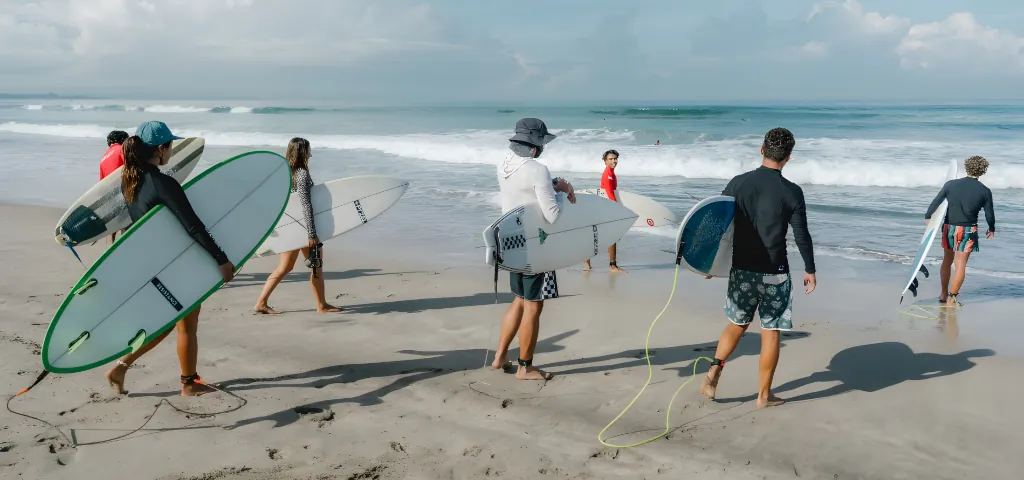
One of the most common and frustrating mistakes intermediate surfers can make is sitting in the wrong spot in the lineup. Sometimes it is hard when the lineup is crowded but that shouldn’t stop you from being in the right spot. It might seem minor, but your positioning can make or break your entire session. Sitting too far out will make you miss the waves, or you will find yourself struggling to generate the right amount of speed. Sitting too far in will get you paddling for closeouts, you’ll get caught inside, or you’ll drop in too late, often under the lip with no chance of making the wave. When advancing to the intermediate level, having the right board for you and the waves you surf is essential for improvement.
Proper positioning means finding the takeoff zone, the sweet spot where the wave starts to break but gives you enough time to catch it with control. A good starting point is to align yourself with a fixed landmark on the beach where you see the best surfers in the water are catching their waves. Watch how far others are sitting when they start paddling and how often they’re adjusting their spot. Waves don't break in the exact same place every time, so you’ve got to stay alert and keep shifting with the sets, the tide and the conditions.
Aim to sit just outside the peak, close enough to paddle easily, but not so deep that you miss the takeoff or get caught inside. If you're not sure where to line up, hang back for a few minutes and study the crowd before paddling out. Watch how the waves break, where they start to steepen, and how far the shoulder stretches. Being well-positioned doesn’t just increase your wave count, it sets you up for smoother pop-ups, cleaner rides and way more fun.

The Pop Up
Getting Up Too Early
Mastering a good pop-up is easy, but keeping it is hard. Standing up too early is another classic mistake and one that can ruin an otherwise perfect wave. When you rush your pop-up before the wave has fully picked up, you end up with unstable takeoffs or simply losing the wave altogether. It’s usually a sign of uncertainty, especially if you are still learning to read the waves. Sometimes, you might end up on your feet, but the wave will not be ready to carry you; that means you're fighting against it rather than flowing with it.
The solution is to wait for the wave to start doing the work, as soon as you feel the tail of your board lift and the glide begins, that’s your moment. Pop up in one smooth, fluid motion, this gives you better balance and more control and sets you up in the right section of the wave. A properly timed takeoff means you’re letting gravity and wave energy work with you, not against you. You’re looking for a clean and controlled motion, this is what makes your pop-up perfect. If you need extra practice, join one of our in-camp sessions where our surf guides help you practice your pop-up until it’s perfect!
A good thing to practice is delaying your takeoff by just half a second on smaller waves. Keep your hands under your chest, eyes looking forward and stay calm. When you trust the wave and time it right, your surfing instantly feels smoother, more connected and a lot more fun.
The Eyes
Not Looking Where You Are Going
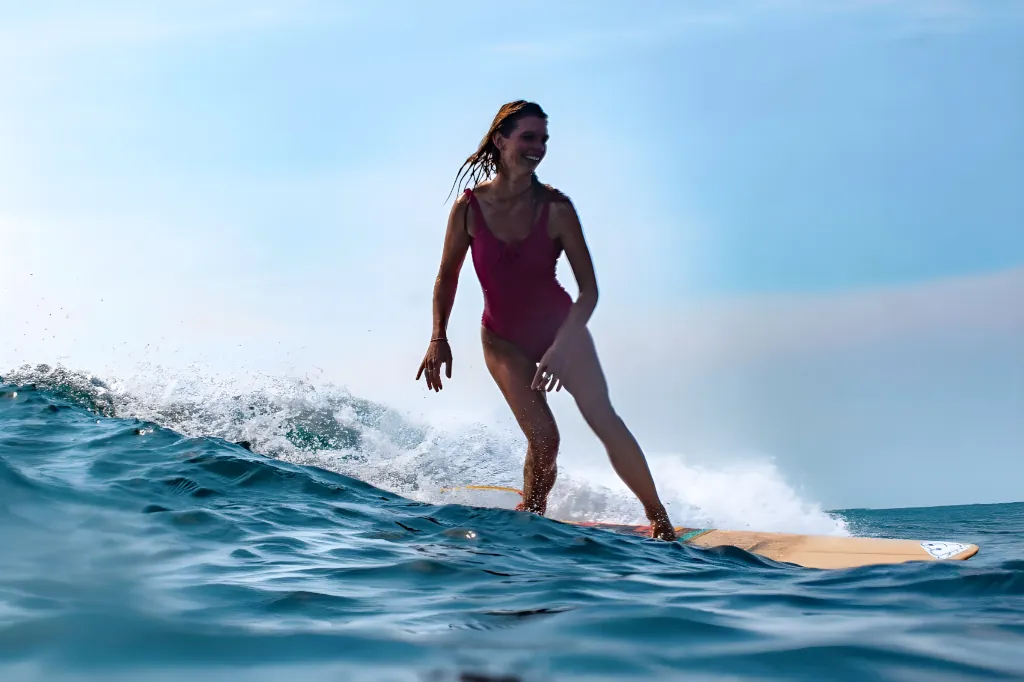
It’s a small habit with a big impact, keeping your eyes down instead of looking where you want to go. Many intermediate surfers unknowingly ride with their head tilted down, focused on the nose of the board or the water in front of them. The problem? Where your eyes go, your body follows. Looking down throws off your balance, stalls your momentum and makes it almost impossible to link turns or generate flow.
Surfing is all about projection; you need to lead with your head and eyes. The moment you take off, your gaze should be directed where you want to go: down the line, toward the open face, or into your next turn. Not only does this help with balance, but it also gives your brain time to process the wave and your next move. Looking up keeps your chest open, your stance stronger and your board following a more intentional path.
To correct it, build awareness into your pop-up. As you stand, make it a habit to immediately lift your chin and focus your eyes to the face of the wave. It's a simple shift, but one that can dramatically improve your control, style and connection with the wave.
The Breath
Rushing Instead Of Relaxing
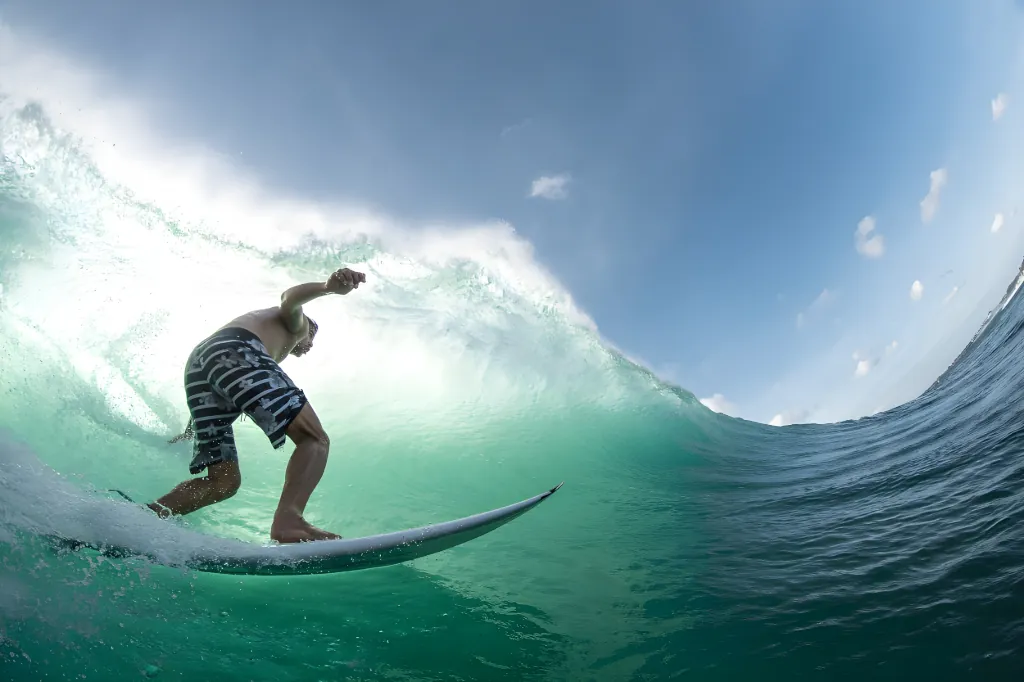
One of the most overlooked habits holding intermediate surfers back is rushing through the waves without relaxing or breathing. After the effort of paddling and popping up, many surfers stay tense, shoulders tight, jaw clenched and breath held. It's a natural response to feel pressured or uncertain, but this tension works against you. It disconnects you from the rhythm of the wave and leads to stiff, reactive surfing instead of a smooth and confident flow.
When you’re tense, your movements become jerky, your reactions are delayed and your connection to the wave becomes weak. Instead, what you need is calm energy. Once you pop up, take a breath, literally. Loosen your shoulders, soften your stance and focus on feeling the wave beneath your feet. Breathing helps regulate your body, slow your mind and shift your surfing from frantic to fluid.
To build this habit, start by focusing on breath control before and during each wave. Inhale as you paddle and exhale as you stand and maintain steady breathing through the ride. At our Bali and Sri Lanka camps, we offer meditation and yoga classes that focus on breath control and loosening tension, which can be beneficial and lead to faster improvement.
Stance
Too Close or Too Far
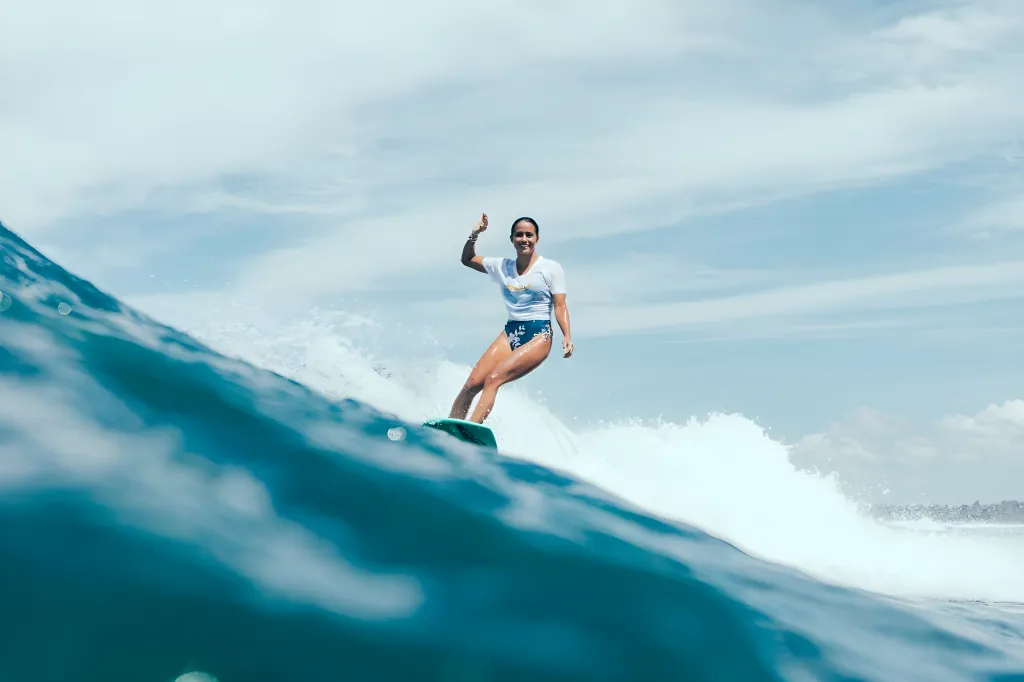
Foot placement is one of the most common and most overlooked issues among intermediate surfers. If your stance is too narrow or too wide, it messes with your balance and makes everything feel more difficult than it should. When your feet are too close together, your centre of gravity sits too high, which makes it harder to stay stable, build speed, or recover smoothly after turns. Too far apart, and your stance becomes stiff, reducing your ability to shift weight and flow with the wave.
The ideal stance is to have your front foot relaxed at around 45 degrees and your back foot at around 90 degrees, depending on the movement you want to initiate. Weight distribution is also important; making sure your front foot is taking the lead when taking off is ideal for a smooth takeoff. This gives you a solid base to push off, carve and adjust as needed. Your knees should stay bent, your body relaxed and your weight evenly distributed, not too far forward or back.
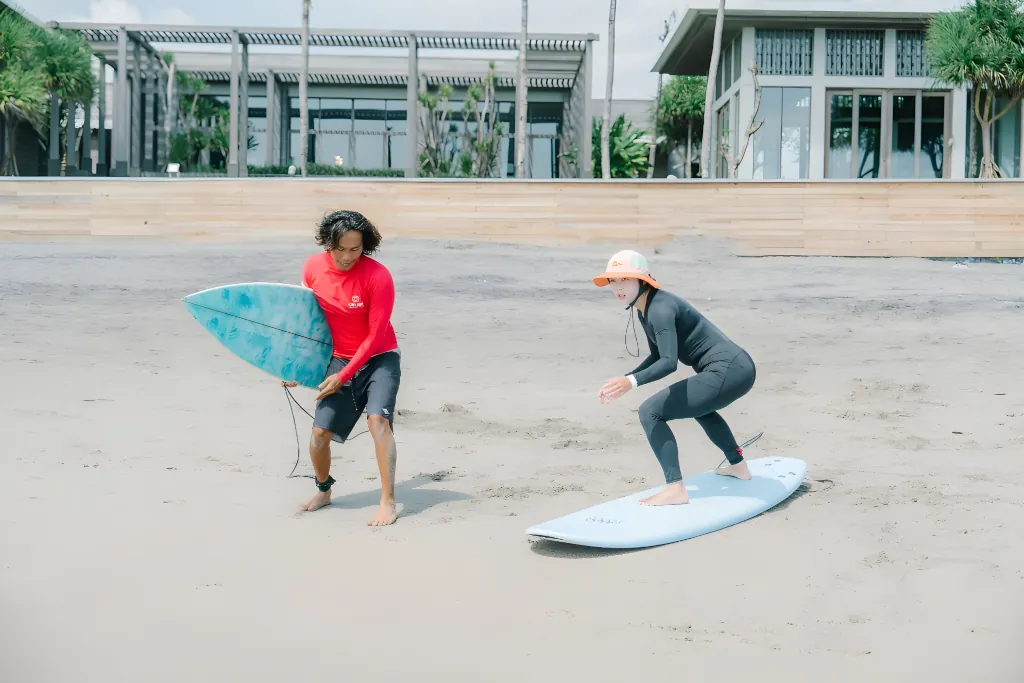
To improve your stance, start by checking your feet after each wave. Did they land where you wanted them? Are you feeling grounded or off-balance? Practising your pop-up on land with tape or markings on your board can help build muscle memory. At our Canggu, Seminyak, Weligama and Hiriketiya camps, we have gyms and balance boards that can help with practising positioning of the feet and pop-ups to help see faster results. A strong stance is the foundation of every good manoeuvre. When your feet are in the right place, everything else, like balance, speed and flow, starts to fall into place.
Mastering the intermediate phase is all about awareness, patience and small adjustments. These five common mistakes are part of almost every surfer’s journey; recognising them is the first step toward real progress. Keep these in mind next time you paddle out and remember, progress in surfing isn't linear, but every wave offers a chance to grow. Stay consistent, stay curious and enjoy the ride.
BOOK NOW